Latest entry
Entry 40
The stack
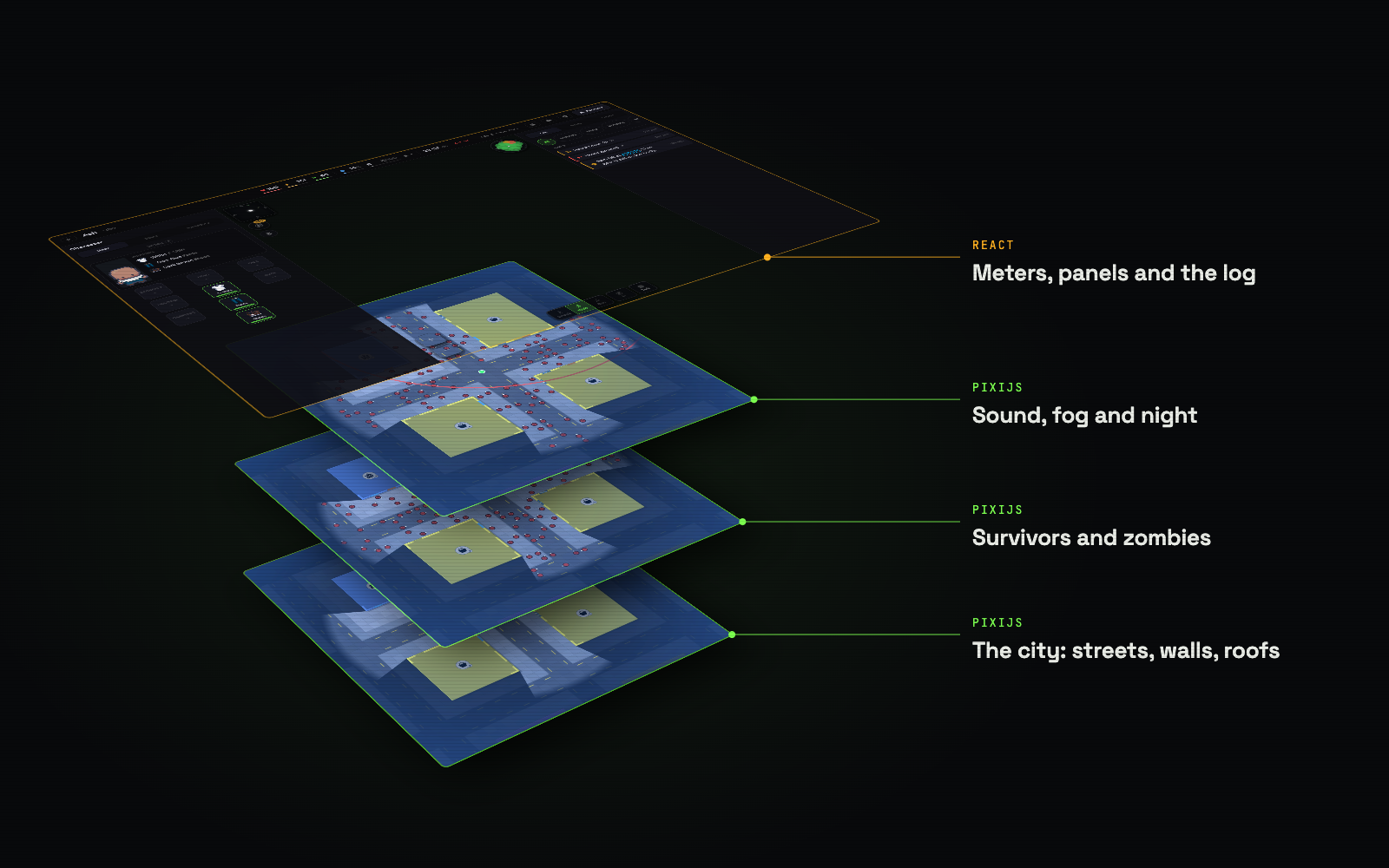
What the game is made of: one language for the world, one for the screen, a contract generated between them, and a practice town that is the same world in your browser.
TechWorldRead →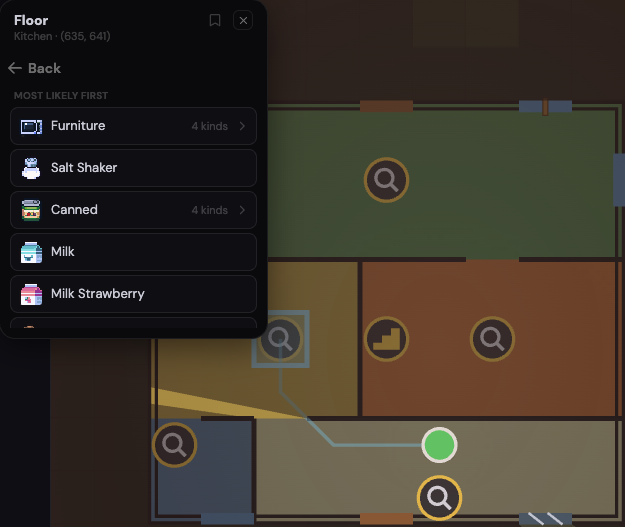
Entry 39
Reading a room
A room is now one thing you can read: one pile for everything left in it, one glyph that says searched, recharging and how full, and one list that names what a room like this tends to hold, best first, without ever giving you the odds.
DesignLootRead →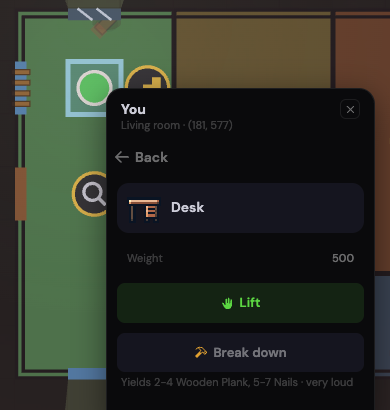
Entry 38
Furniture, and what it breaks into
The forty-five placeholder tiles got faces, and then furniture stopped being loot: you carry one piece in your hands, or you break it down into planks, nails, scrap and rags, and every one of those gets used up by something. Also, a chainsaw.
DesignLootRead →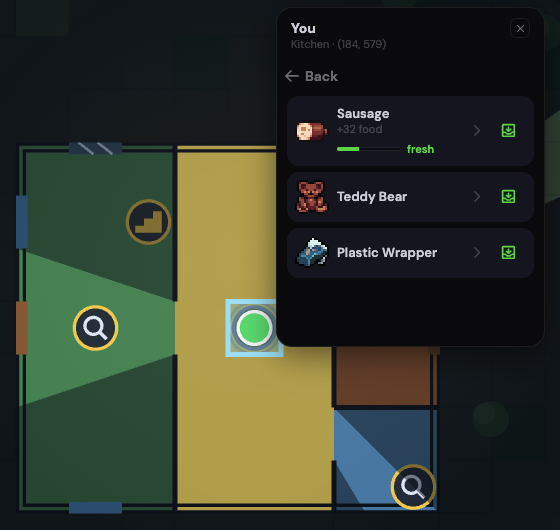
Entry 37
Picked over
Searching had become a vending machine, every search paid out, nothing worthless existed and a room never ran dry; now a room holds junk, a search can come up empty, a picked-over kitchen says so before you spend the energy, and the furniture is finally in the rooms.
DesignLootRead →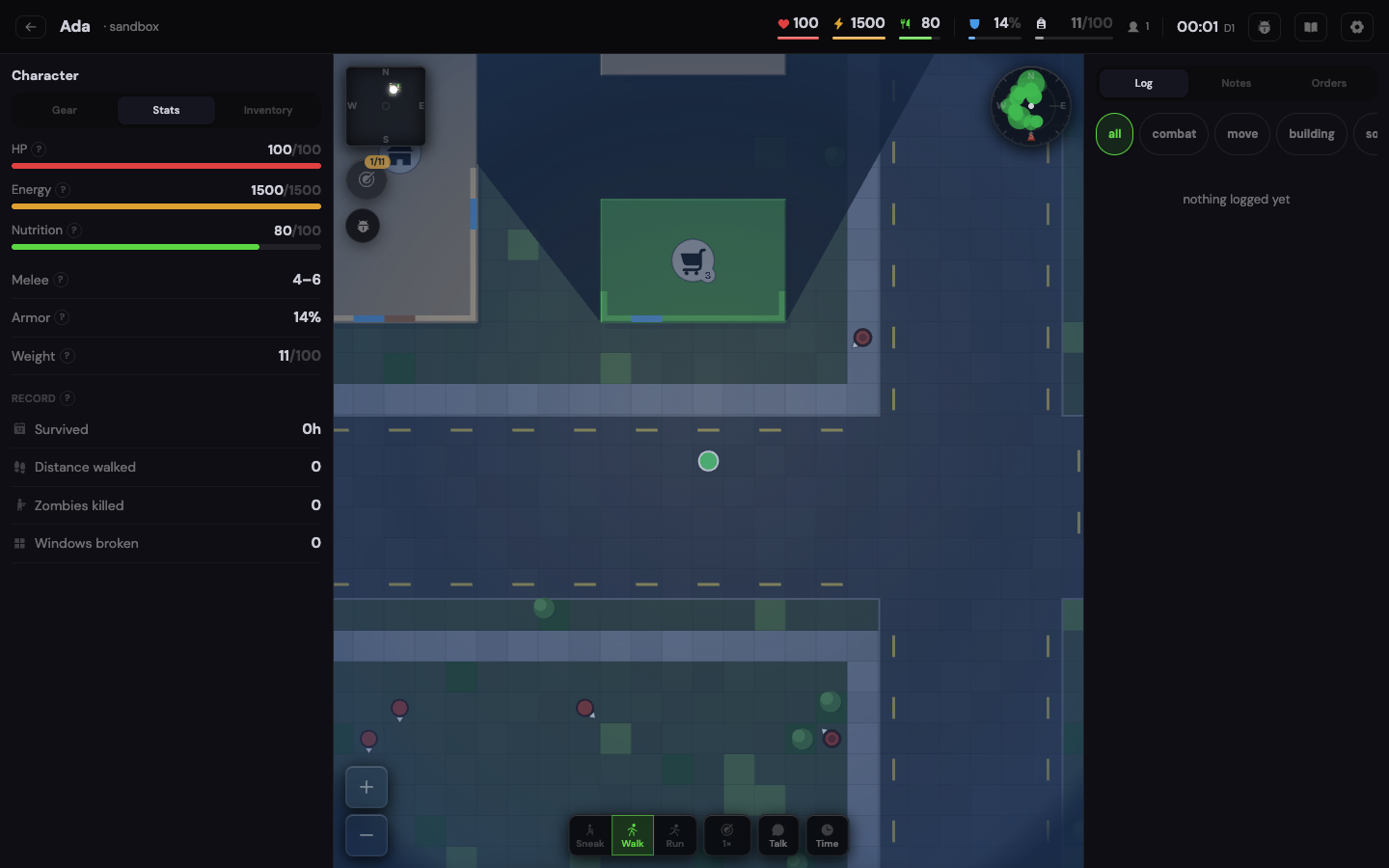
Entry 36
The practice town
A whole town that runs inside your phone, with no server and nobody else in it, where dying costs nothing, and with the one power the real city never gives you: the clock is yours.
DesignPracticeRead →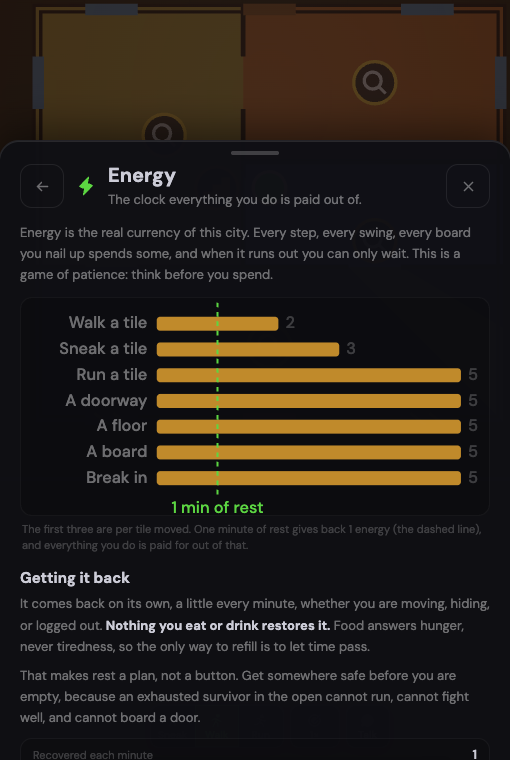
Entry 35
Learning the game
How the game teaches itself: tips that sit next to the thing they talk about, a building that walks you through its rooms the first time, and a Survival Guide inside the game whose every number is read off the live rules.
DesignOnboardingRead →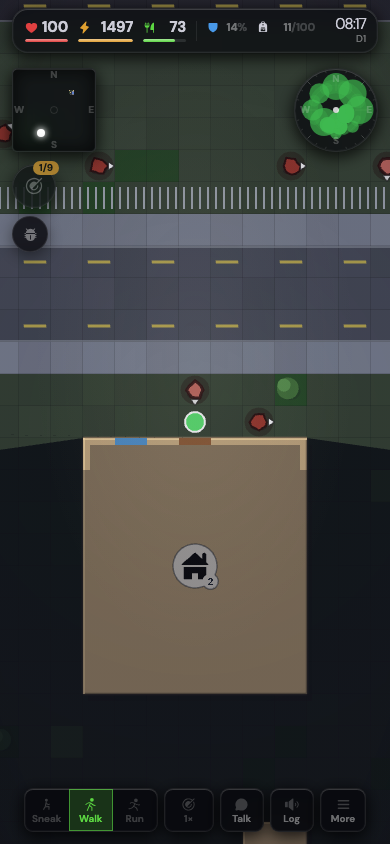
Entry 34
The screen, again
A week on the screen itself: the map now runs edge to edge and everything else floats on top of it, gauges instead of digits, one row of controls where the thumb is, conditions as dials on the map, and a sight edge that lights only what you can see.
DesignPhoneRead →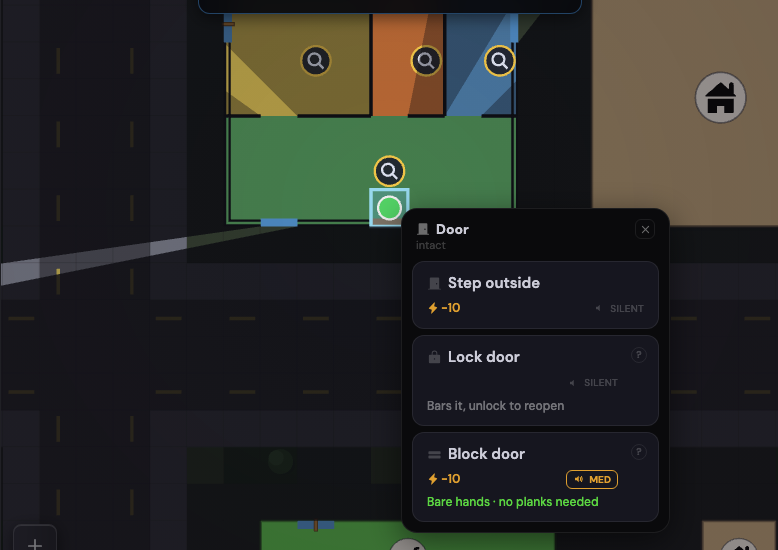
Entry 33
Stand in the opening
A door works both ways now, a zombie shut in chews its way out, a broken door can be put back on its frame, and to bar, board or unboard anything you stand in the opening to do it.
DesignDoorsRead →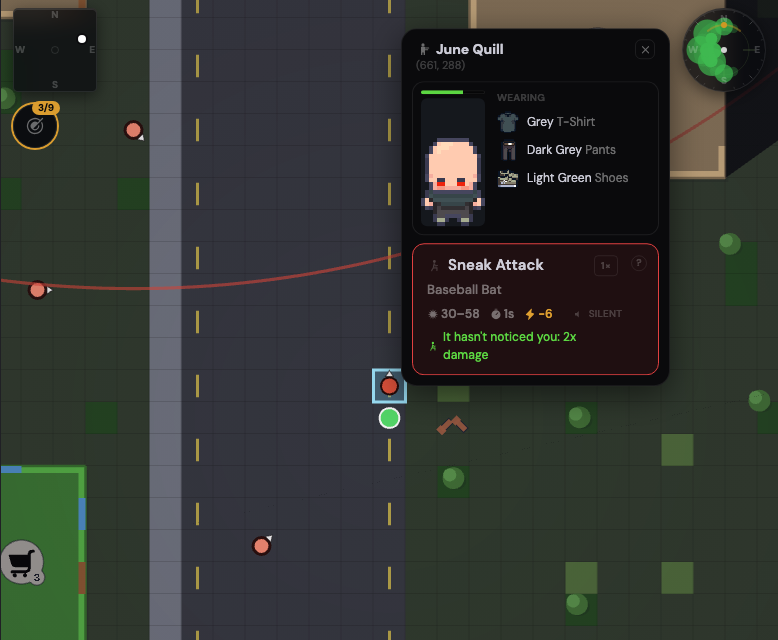
Entry 32
The first hit
A hit on a zombie that hasn't noticed you lands twice as hard, and then it has noticed you; fists stop at shut windows, a zombie in your own doorway is a fight, and a survivor who died and got up looks like any other walker until you look closely.
DesignCombatRead →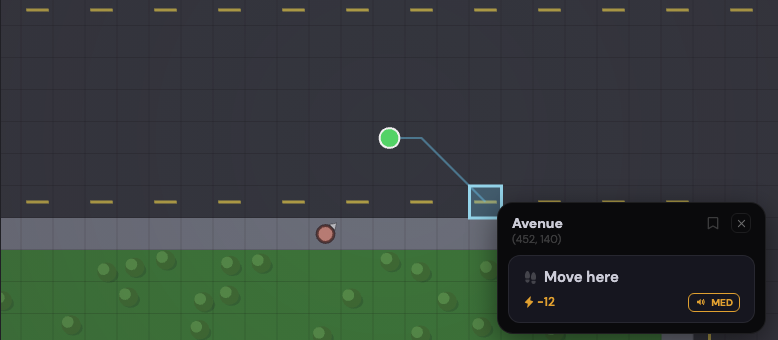
Entry 31
Carrying too much
The pack used to have a wall at full, and now you can go past it and pay for it: overloaded, every step costs double, takes twice as long, and you can't run.
DesignItemsRead →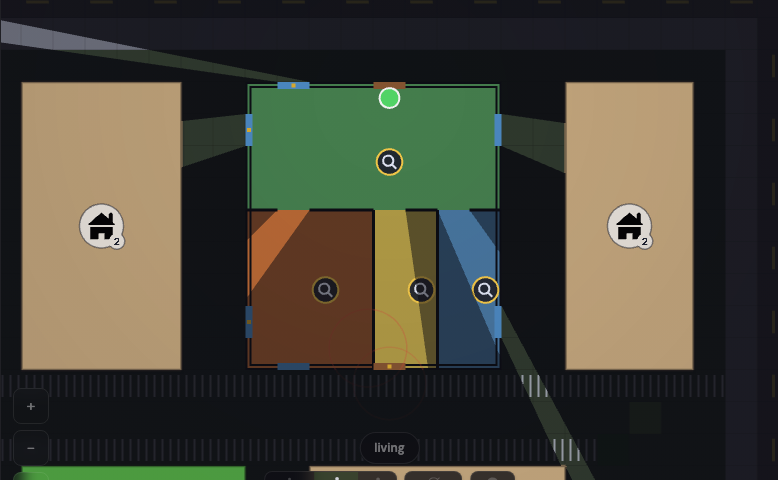
Entry 30
Real interiors
A building used to be a menu you opened at the door; now you step inside and the roof comes off, with rooms, walls, doorways and a floor you walk tile by tile, on the same map as the street outside.
DesignBuildingsRead →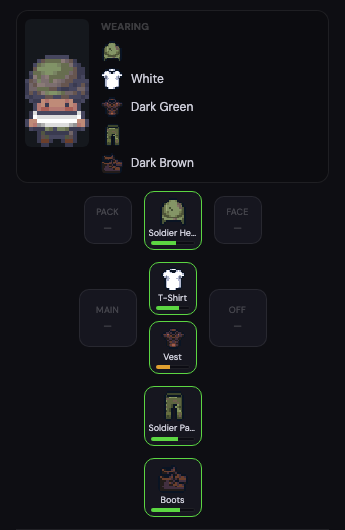
Entry 29
What you wear
Armor was a flat number that made a t-shirt too good; now each piece takes a share of every hit, the shares add up to a ceiling, and the piece doing the most work is the one that gives out first.
DesignItemsRead →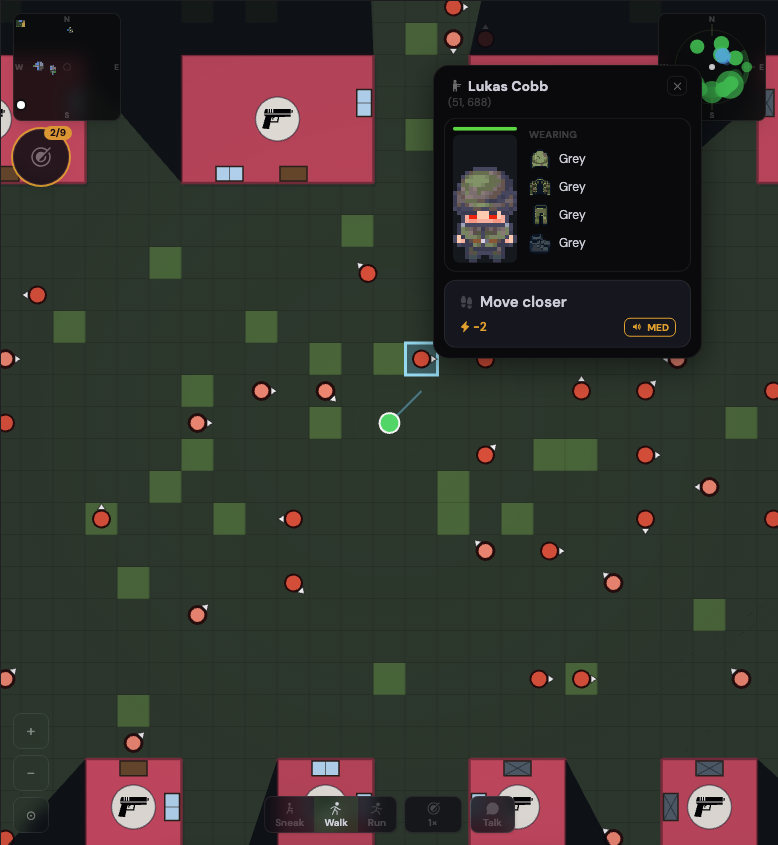
Entry 28
What the dead hear
The zombie got smarter this week: sound pulls it with a weight and then fades, a loud enough noise makes it force a boarded door and climb the stairs, it searches the spot where it heard you, and some buildings now have guards that never left.
DesignZombiesRead →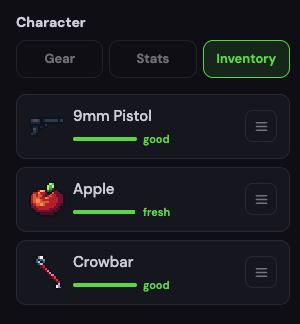
Entry 27
Things wear out
Food goes off, weapons wear down and break, armor takes the hit and gives out, and a found gun keeps whatever was left in it.
DesignItemsRead →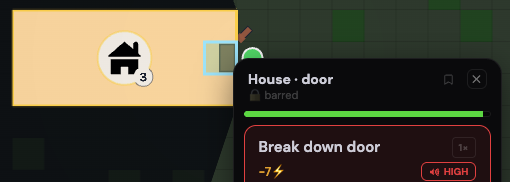
Entry 26
Locks and boards
A week on the door: keys went in and came straight back out, and what stayed is a bar you throw from inside, three grades of boards, and three ways through a boarded door.
DesignDoorsRead →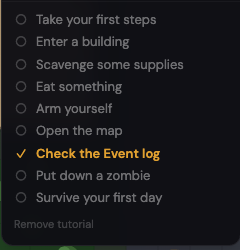
Entry 25
The first hour
Every entry so far is for people who already know the rules, and this one is for the person who has never heard of the game and has an hour to decide.
DesignOnboardingRead →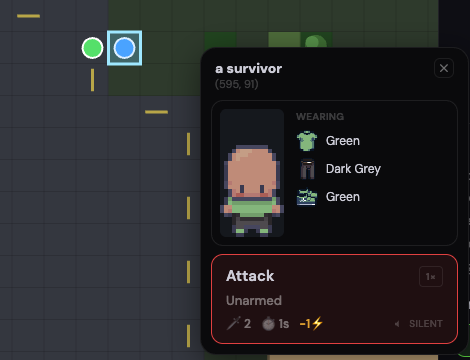
Entry 24
Other survivors
Every entry so far is one person against the city, and this week the game got its second player: you can talk to them, from a short list, and you can attack them.
DesignPlayersRead →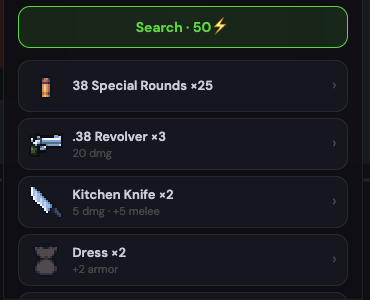
Entry 23
What you find
Every entry says search the shelves and none has said what is on them: now a gun shop holds guns, a house holds a shovel and a first aid kit, and downtown holds the best of it.
DesignLootRead →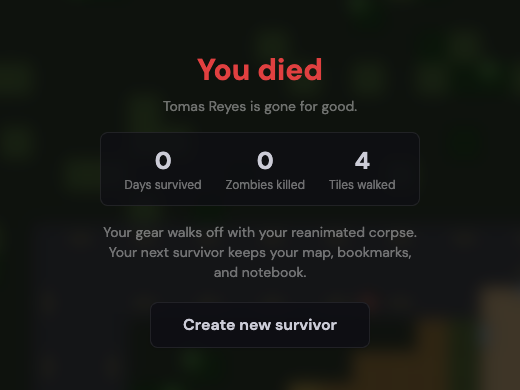
Entry 22
Gone for good
Death is permanent now, and what survives it is you: the map you walked, the notes you took, and a record of everything your survivor did and had done to them.
DesignDyingRead →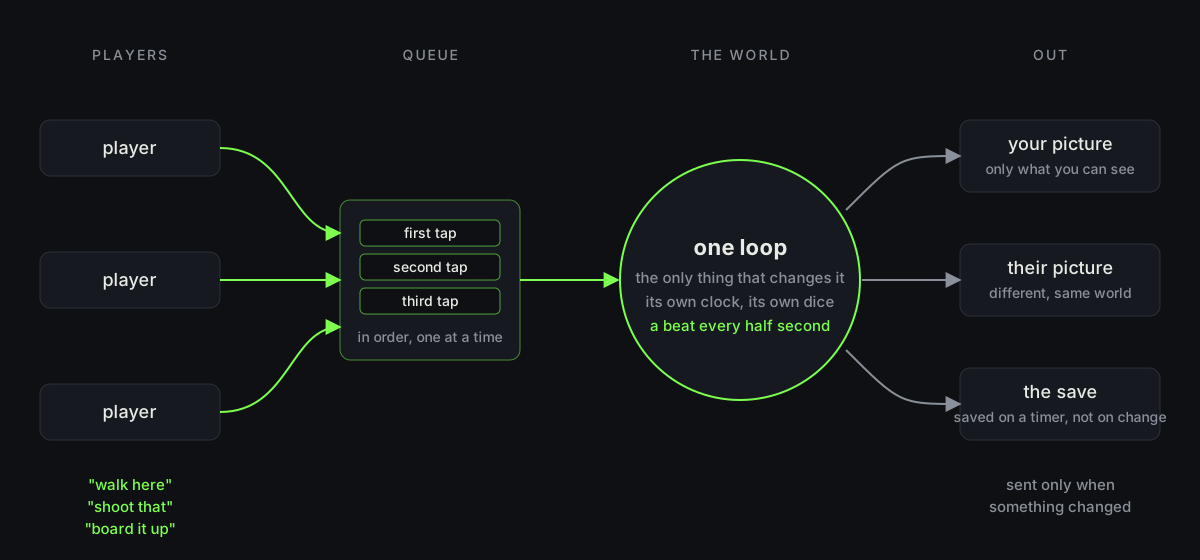
Entry 21
How the world runs
Every entry says the server decides, and this one says what the server is: one loop, one queue, a beat every half second, and a screen that works out everything it can.
TechWorldRead →
Entry 20
Making your survivor
Until this week you were a number in random clothes; now you pick a name, a face and what you wear before you walk in, and the name is for keeps.
DesignCharacterRead →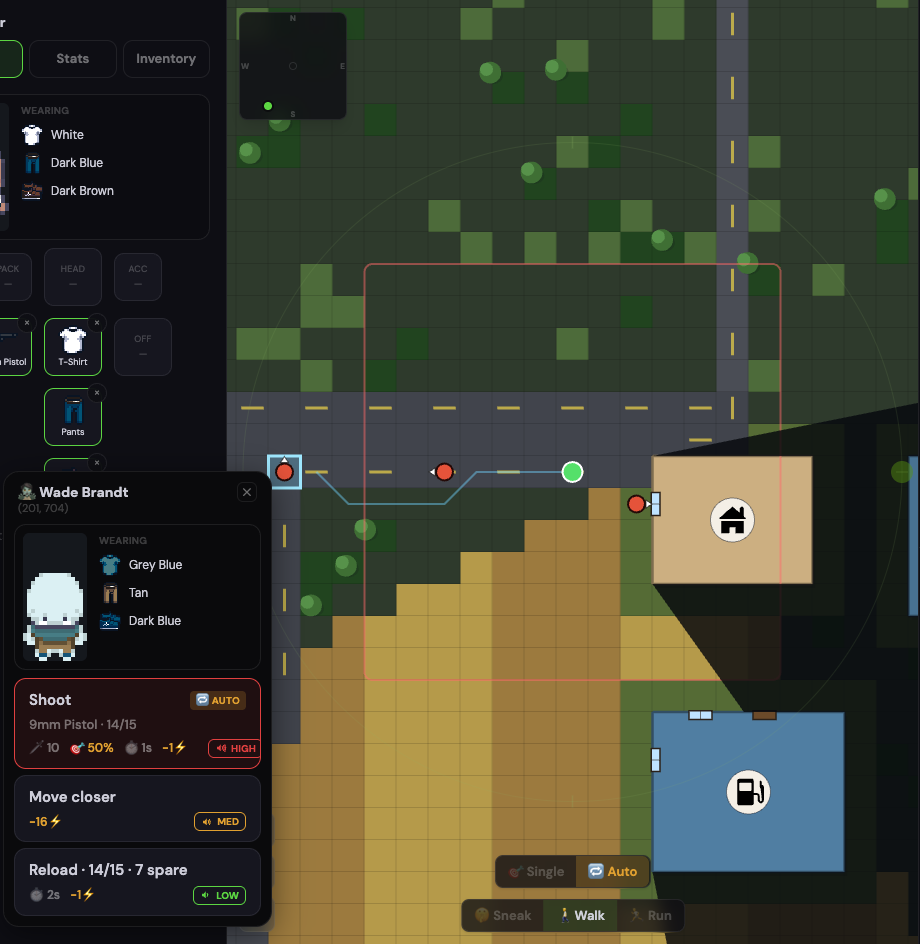
Entry 19
Auto, after all
A day on combat: weapons take their time now, guns get worse with distance, reloading costs you the gun, and there is an auto toggle after all.
DesignCombatRead →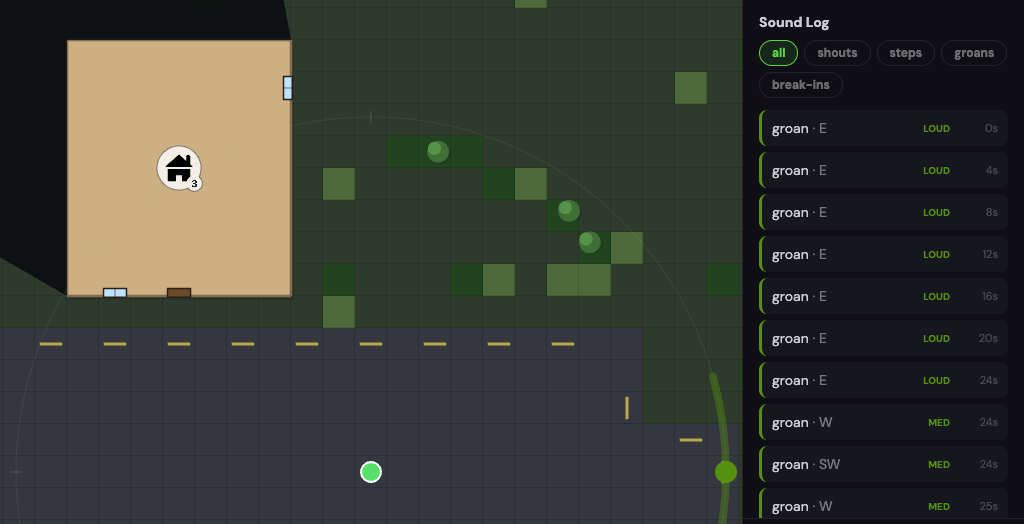
Entry 18
The murmur
A whole day on the thing the game is built around: what you hear and what they hear are different now, you don't hear what you can see, walls leak, and a crowd is a murmur.
DesignSoundRead →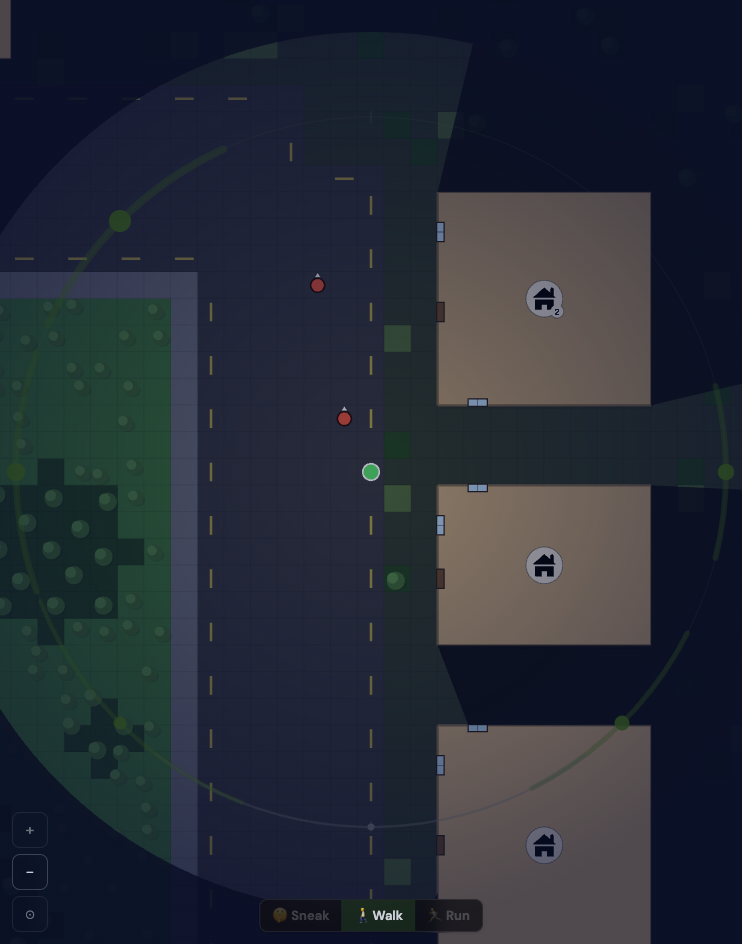
Entry 17
What you can't see
The other half of the new look is the dark: what the lit circle around your survivor means, why the ground behind a house is cut out of it, and what a window gives you back.
DesignLookRead →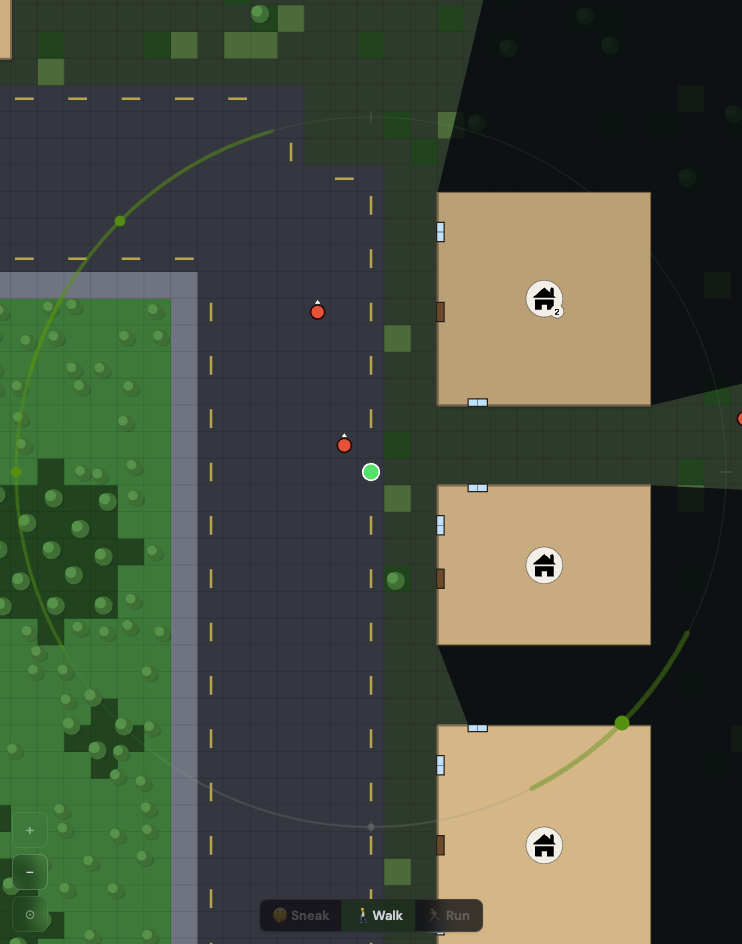
Entry 16
The look
For two months the city was coloured squares; this week it became a place you can read at a glance, flat and seen from straight above.
DesignLookRead →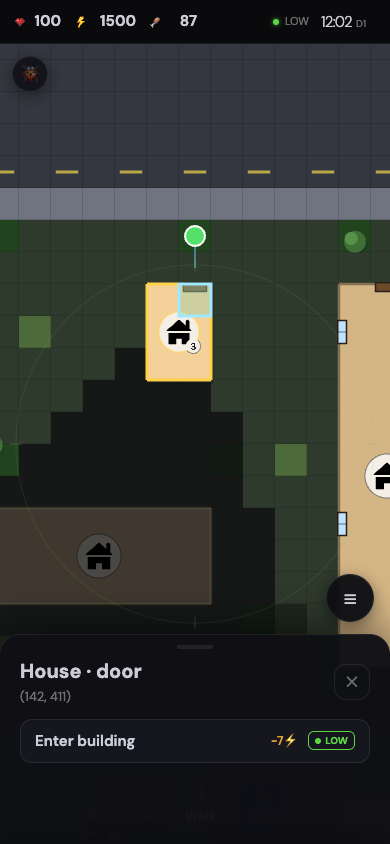
Entry 15
The phone
The plan promised the phone would be a real way to play, and this is the week that got paid, with one rule: the map is never covered.
DesignPhoneRead →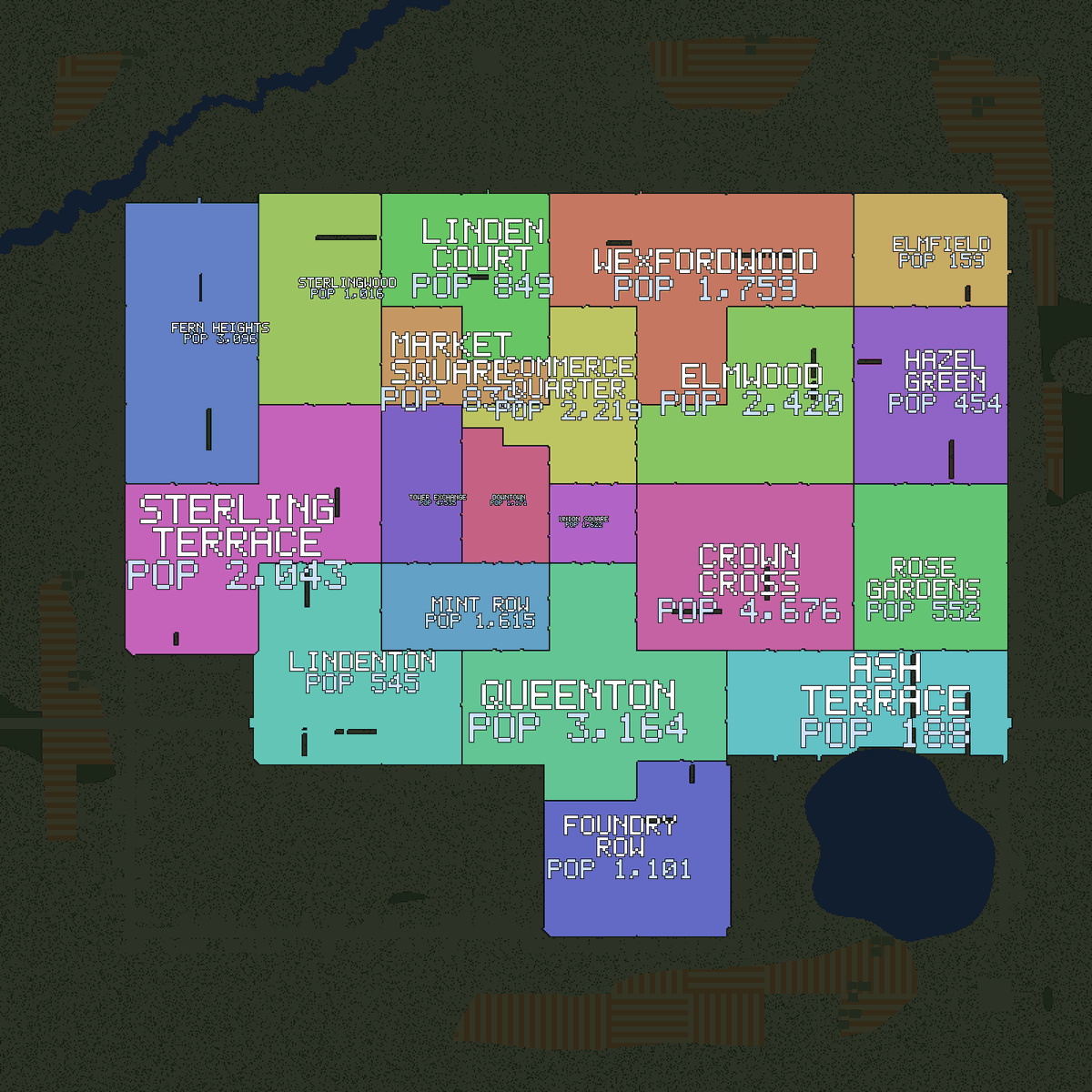
Entry 14
Doors, names and numbers
The city entry left three things out that matter more to a survivor than any zone map: where the doors are, what the streets are called, and how many people used to live on each one.
DesignCityRead →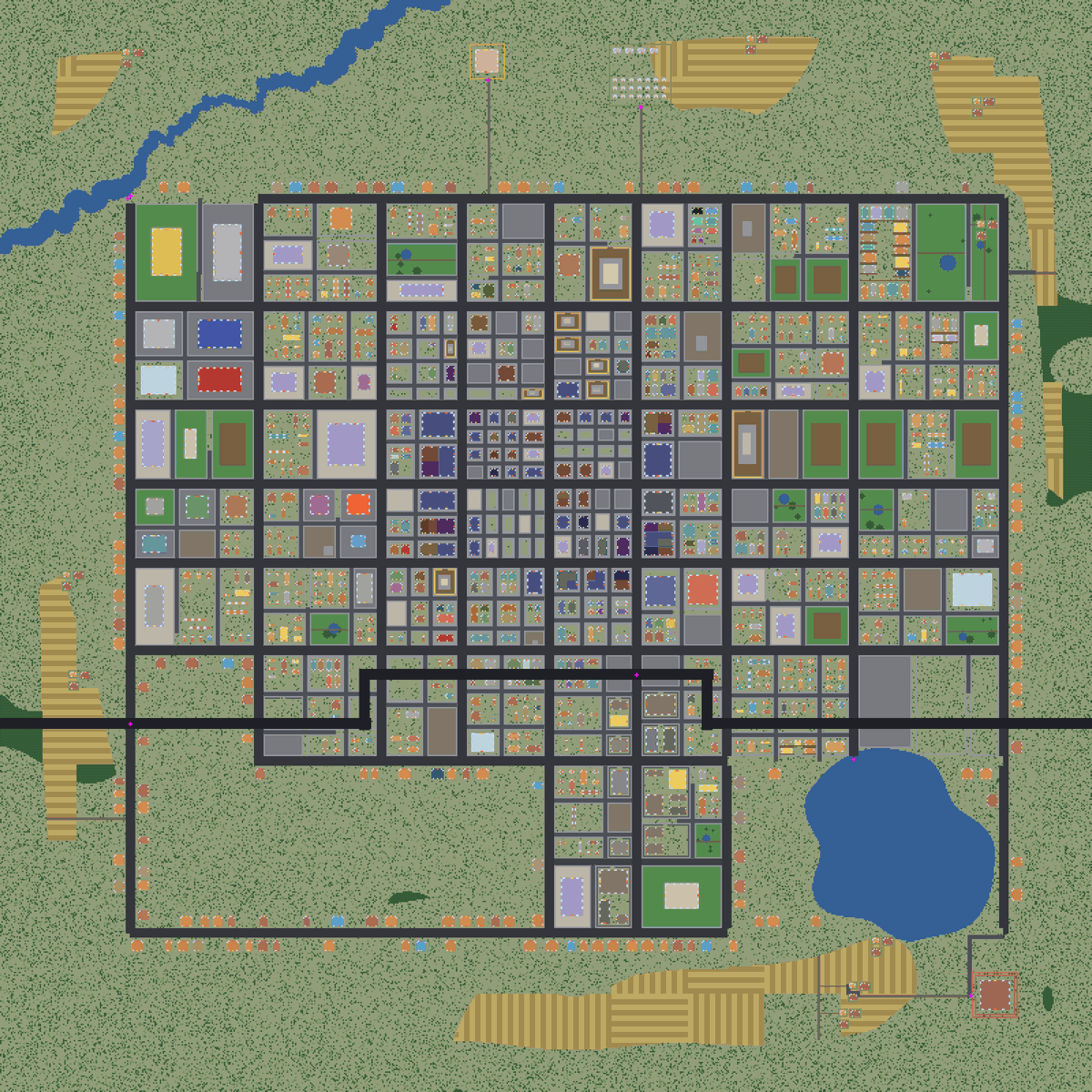
Entry 13
The city
The city used to be a rough first map, and this week I rebuilt the machine that makes it, so every number you give it makes a different city.
DesignCityRead →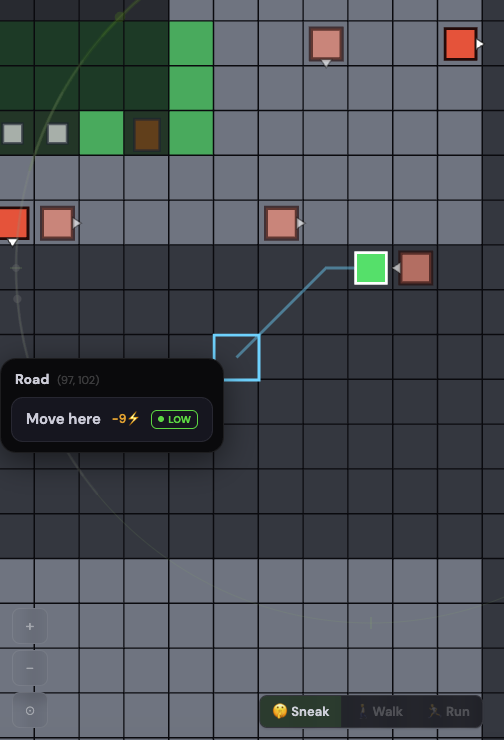
Entry 12
Moving
Every entry says your steps make noise and cost energy, and none has said you get to choose how you step: now you do, sneak, walk, or run.
DesignMovementRead →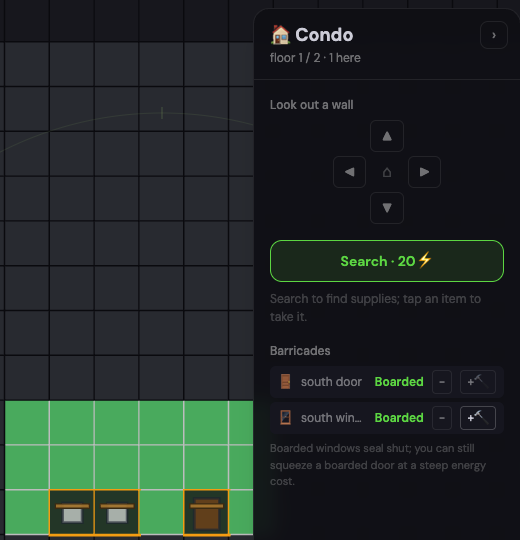
Entry 11
Barricades
A door is a countdown, and this week you can make it a longer one, with planks, energy, and a lot of hammering everyone gets to hear.
DesignBarricadesRead →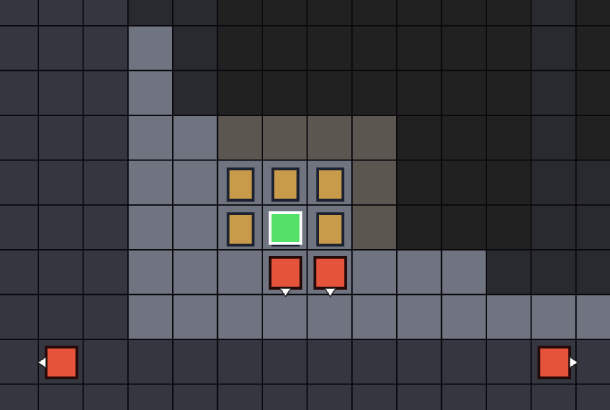
Entry 10
Zombies
The plan said zombies are slow and they listen, and this week I decided what that means: a zombie here is slow, half blind, and never gives up on a door.
DesignZombiesRead →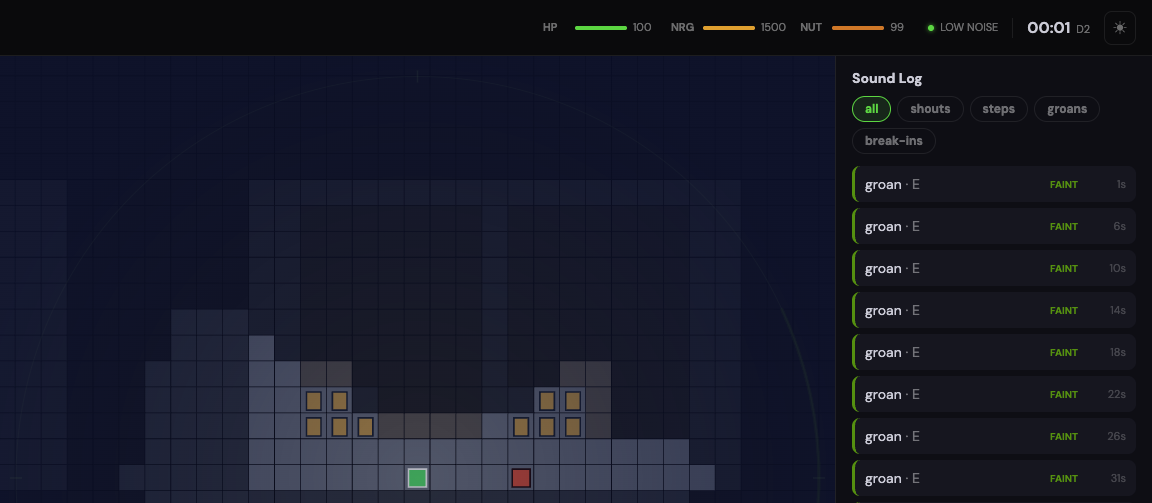
Entry 9
Night
The city has a clock now, and at night you see less, so you listen more, and the street you knew in daylight is a different street.
DesignNightRead →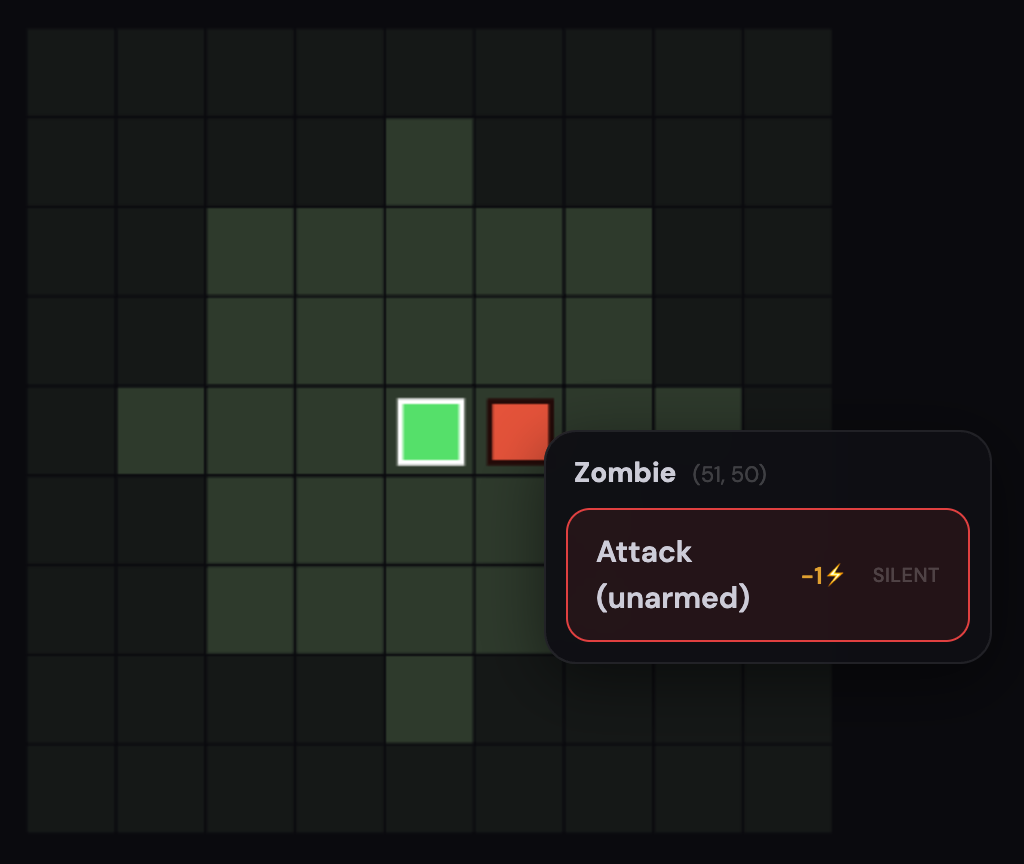
Entry 8
Fighting
Your character never swings back on its own: you tap the thing, you read what it costs and how loud it is, and then you decide.
DesignCombatRead →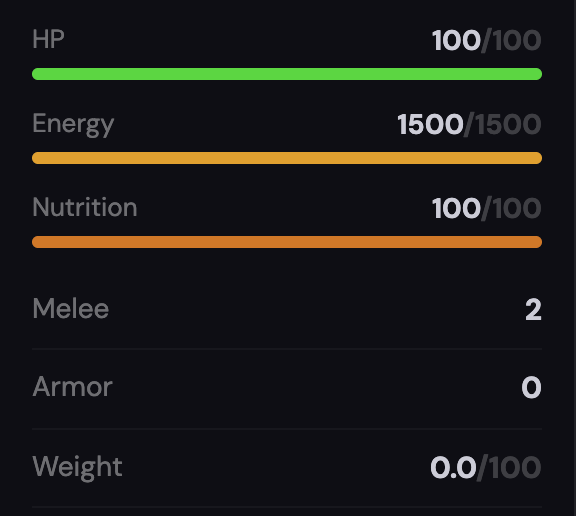
Entry 7
Energy
Everything you do costs energy and time is what gives it back, which is what makes this a game you check on instead of a game you sit in.
DesignEnergyRead →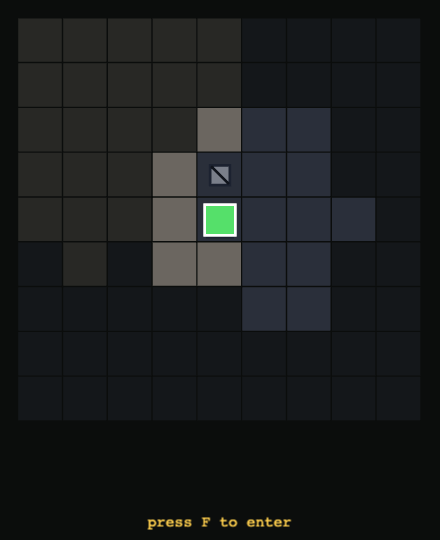
Entry 6
Buildings
You can go inside now, and a building turns out to be a place to hide, a place to loot, and a box you can't see or hear out of.
DesignBuildingsRead →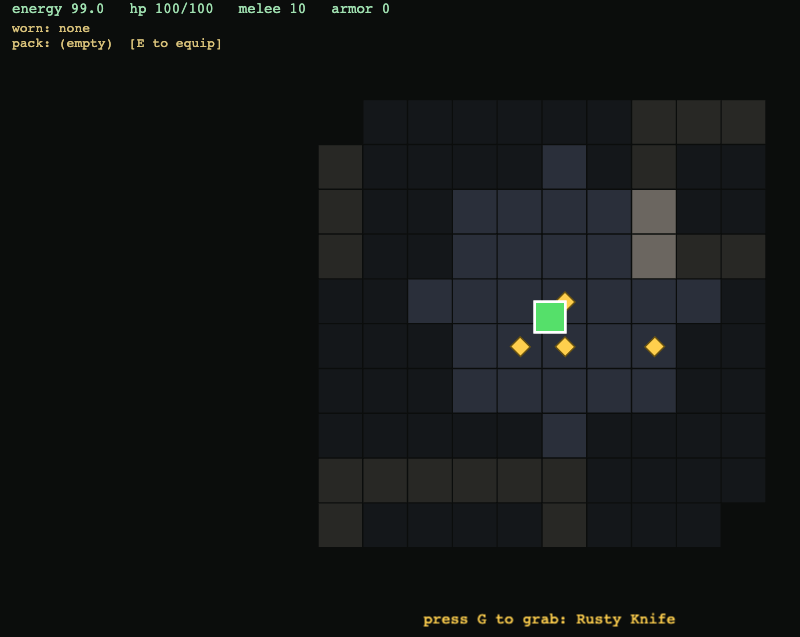
Entry 5
Gear
There are no levels, so what you're carrying is the only thing that makes you different from anyone else, and now there are things to carry.
DesignGearRead →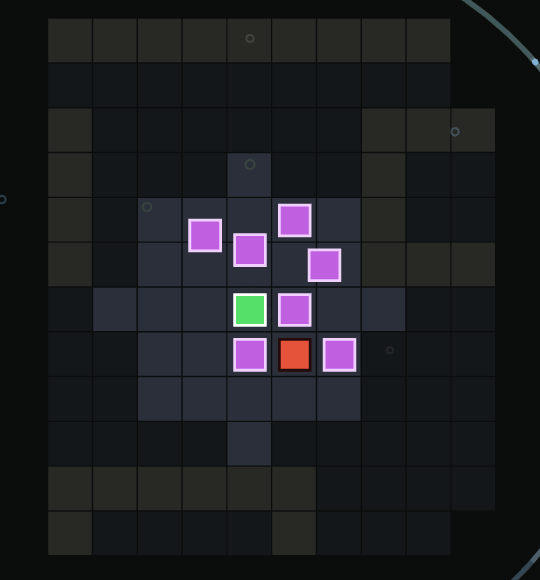
Entry 4
Dying
Death is in: your survivor stands back up as a zombie where it fell, and the rule that it keeps your things is decided even if there are no things yet.
DesignDeathRead →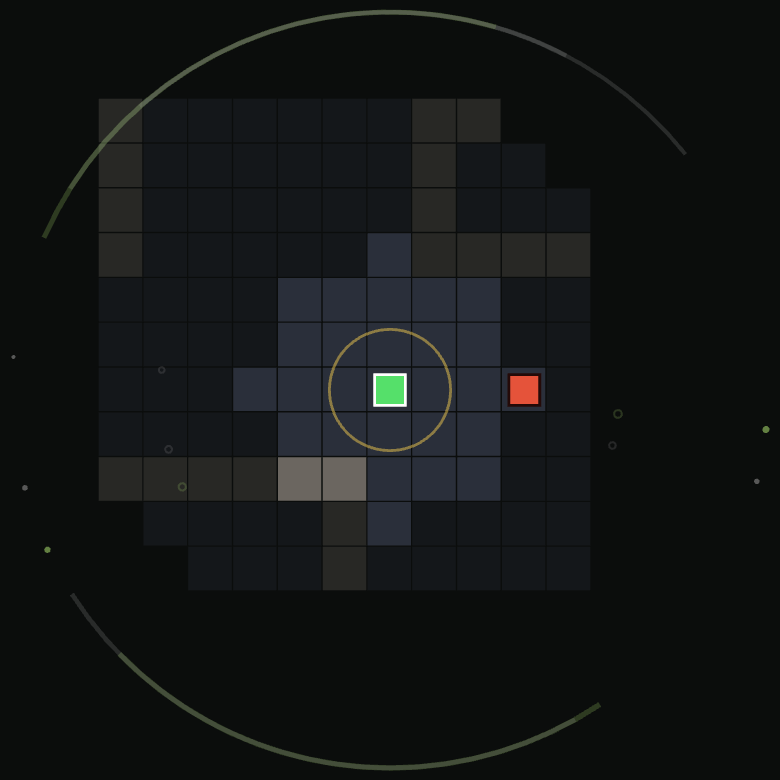
Entry 3
Hearing
The first thing in is the sound idea: a survivor on a grid, a few zombies, and a log of noises.
DesignSoundRead →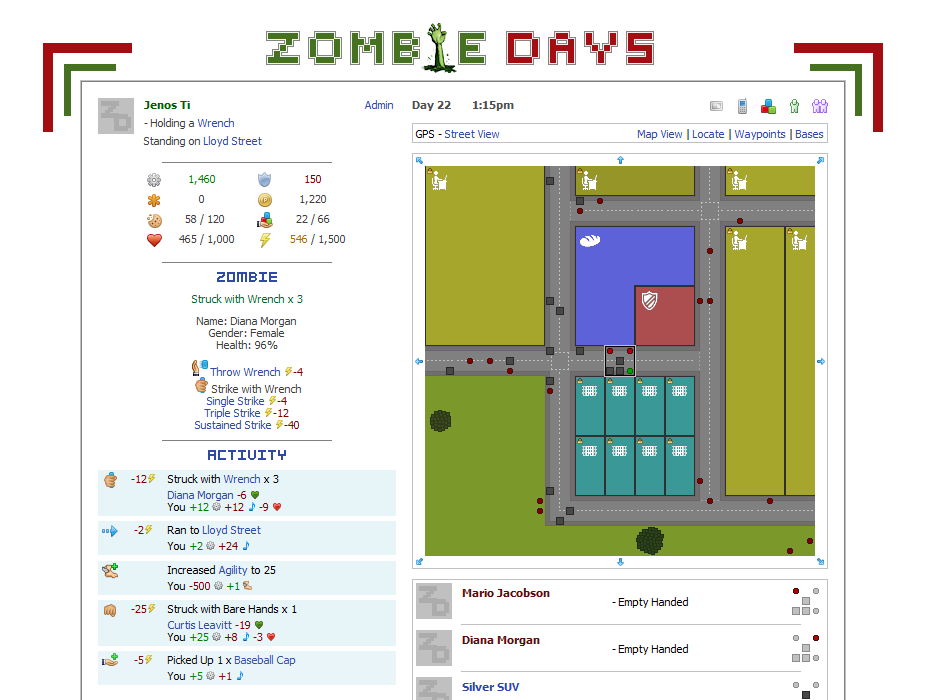
Entry 2
The plan
Before the first zombie, here is the list of rules I'm going to build, written down so I can see later what changed.
DesignPlanRead →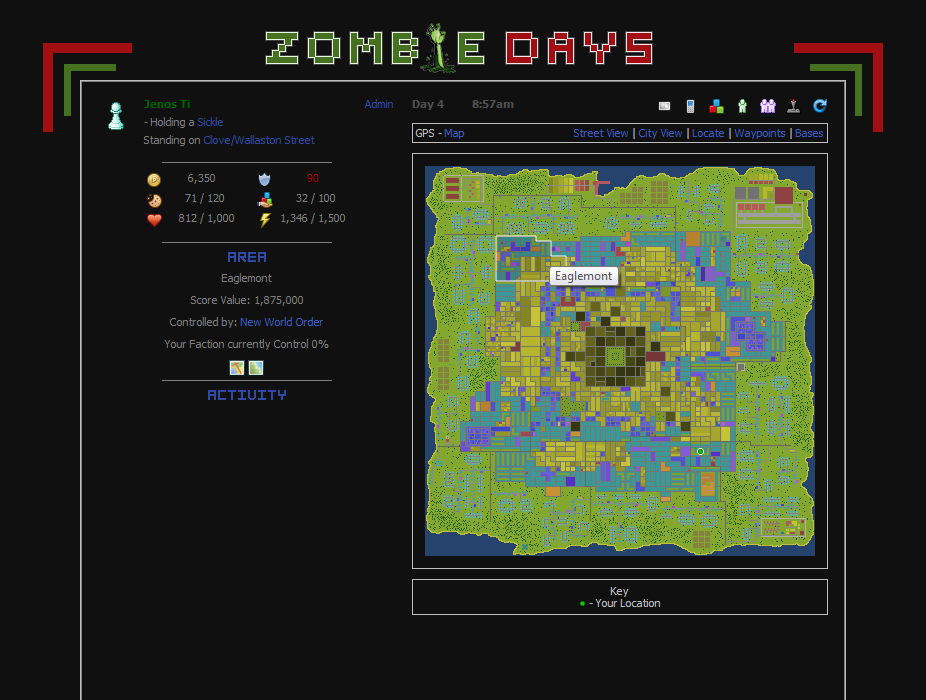
Entry 1
The game I want to play again
Years ago I played a browser game called Zombie Days, and since it's gone and nothing took its place, I'm going to build the game I wish it had become.
DesignInspirationRead →