The Buildings entry said the inside of a building didn’t get a map. You entered, and the building became a list. It held for two months, and this week I threw it out. A building is now a place. You walk in and stand on a floor with rooms and walls, you move tile by tile, a wall breaks line of sight, and you know the layout of a house you have cleared because you walked it.
The roof comes off
I tried the obvious version first: you enter, the screen changes, the interior is its own little map you are transported into. It read as being moved into a separate little world, and the building stopped being part of the city.
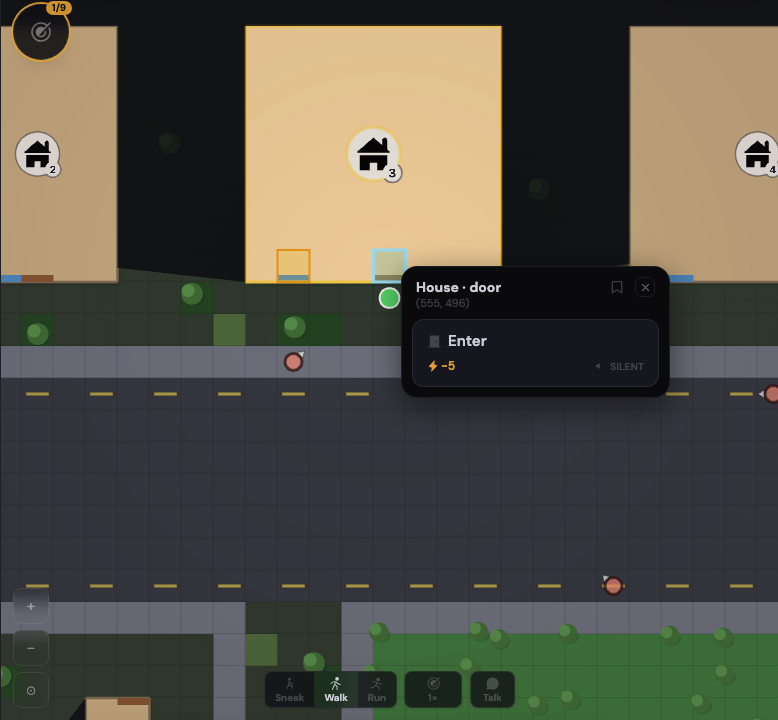
What shipped instead peels the roof. You enter through the door the same way as before, at the same cost, and the roof of that one building dissolves and shows its ground floor in place, on the same map, with the street still around you.
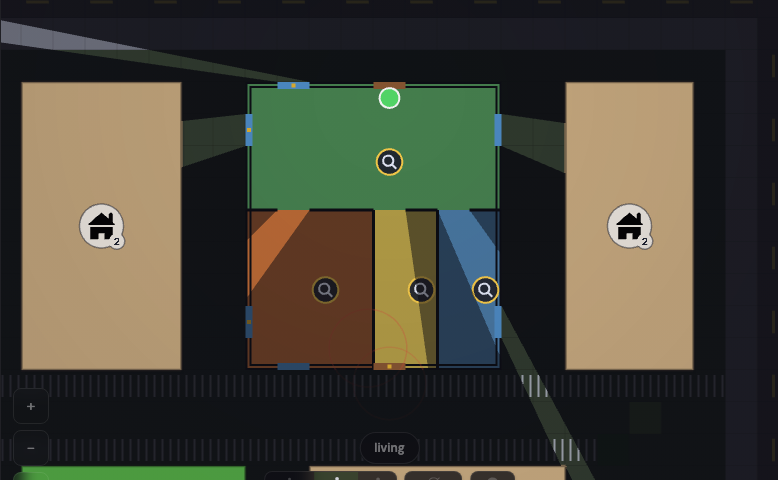
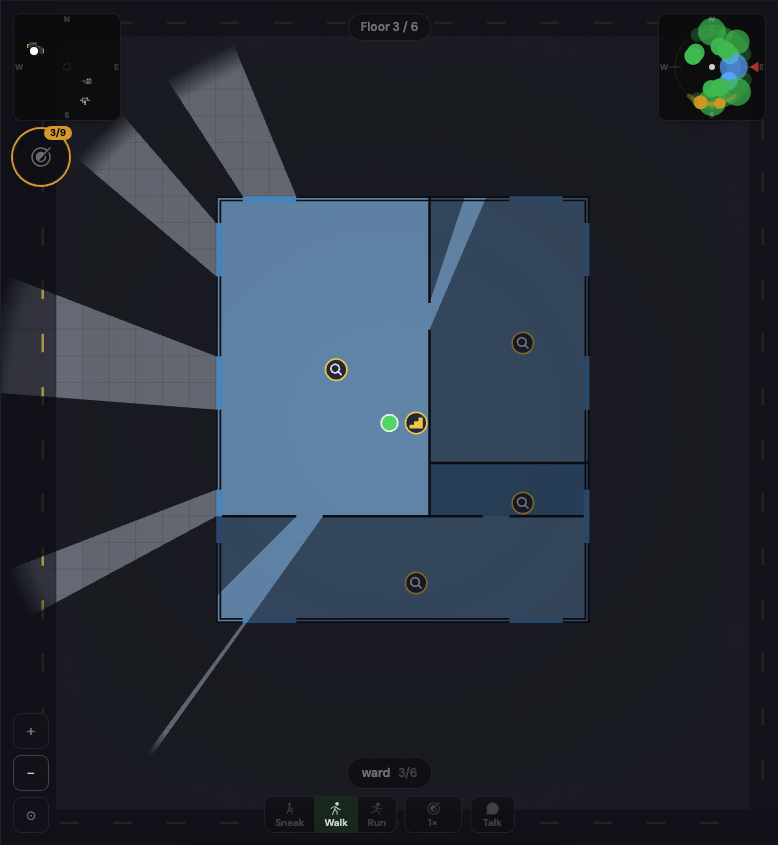
The interior is built from rooms. A house has a living room fronting the door, a kitchen, a dining room and sometimes a small bathroom behind it, joined by doorways, and bedrooms upstairs. Walls are thin lines between tiles, so a small house still has room to stand in. Every kind of building got its own recipe. A shop is a sales floor with a storeroom behind it. A hospital is a waiting room, exam rooms, an office and a storeroom on the ground floor, and wards on the floors above.
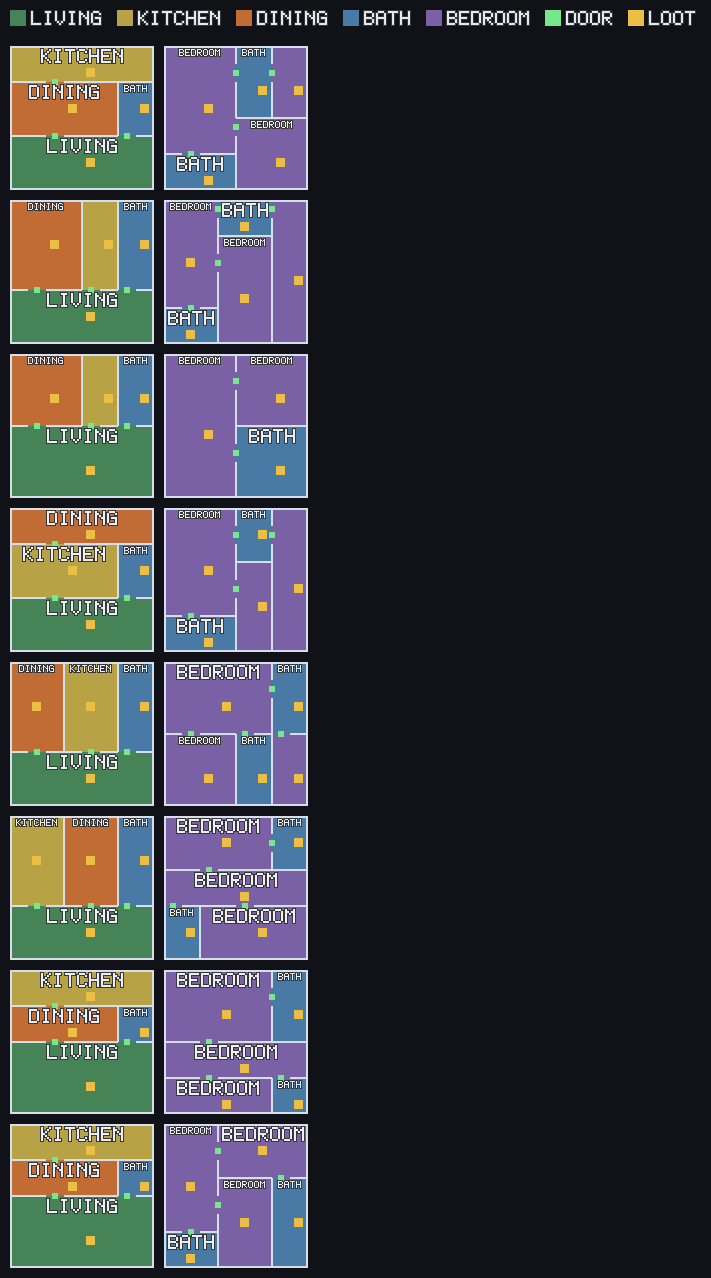
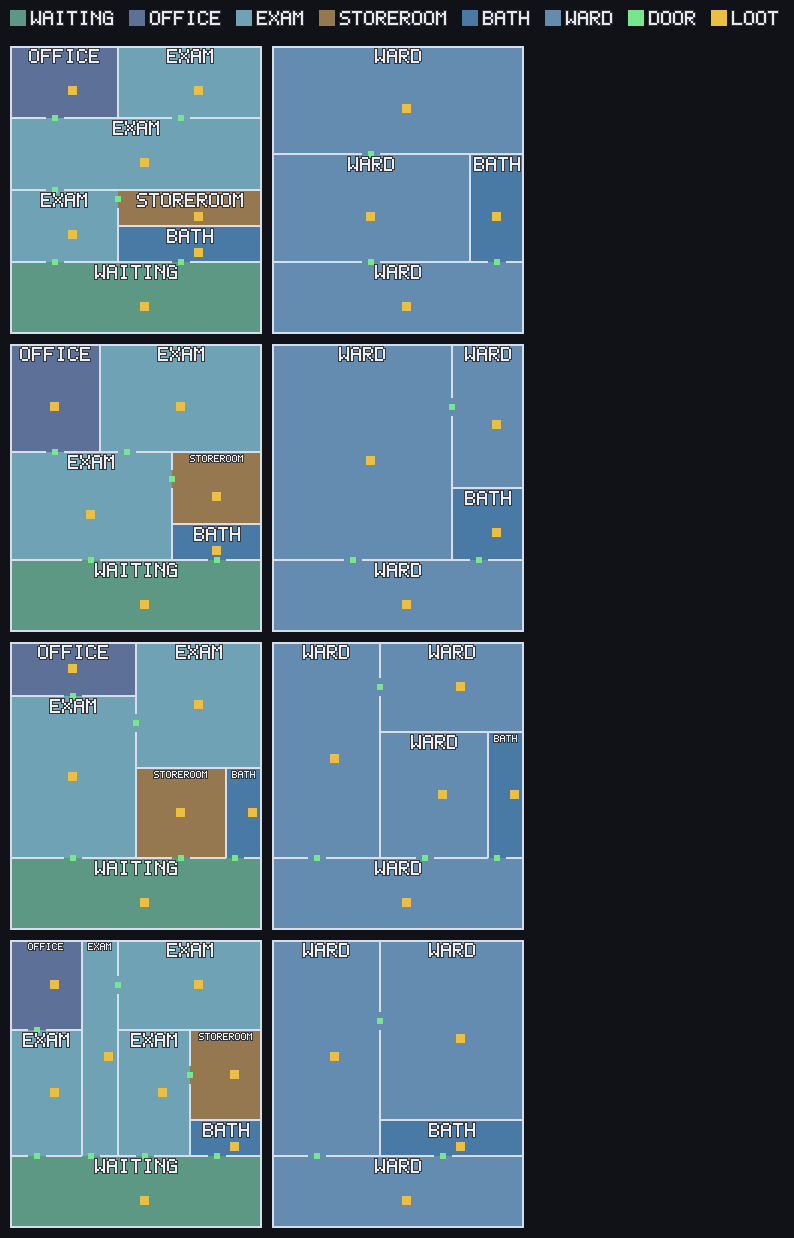
What a room does
Loot is the reason rooms exist. The What you find entry said what you find depends on the building. Now it depends on the room. A kitchen leans to food but still gets whatever the house holds. A bathroom holds medicine. A bedroom holds clothes. Each room has one search spot, walking to it costs what walking costs, and a room you have searched stays searched until it restocks. You can see all of that on the floor before you commit.
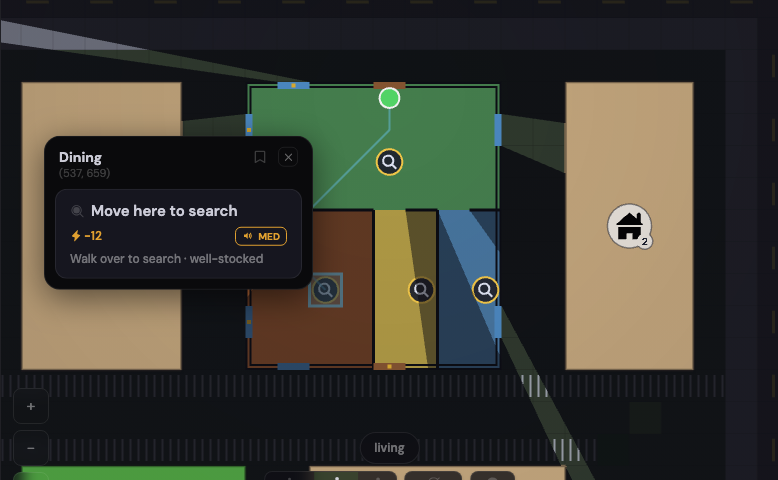
The second thing a room does is block sight. Indoors you see about half as far, and only what a straight line from you can reach. Walls stop it. Doorways let it through, so standing in a doorway you see two rooms. Windows let it out: from the right spot inside you see a wedge of the street through each window. A room you can’t see is drawn faded, not black, so you keep the layout in your head without being told what’s in it now.
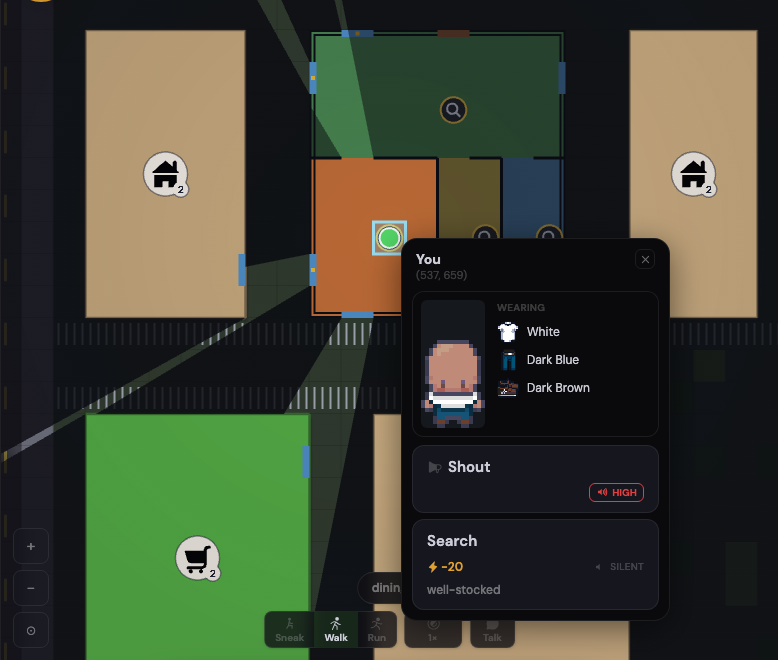
The same rule works the other way. From the street, a roof is a roof. You cannot see into a building through its windows, and you cannot shoot or punch a zombie that is inside from outside. If you want what’s in there, you go in. I did build the see-in version, a cone through each window a few tiles deep, and it lasted a couple of days. It made the street tell you everything a closed door was supposed to hide.
Doorways and stairs
A door is now a tile you cross, and crossing it is the exposed moment. You land on the threshold, where anything already inside can reach you, and you can’t stop there from outside. If someone is standing in the doorway you don’t get in at all.
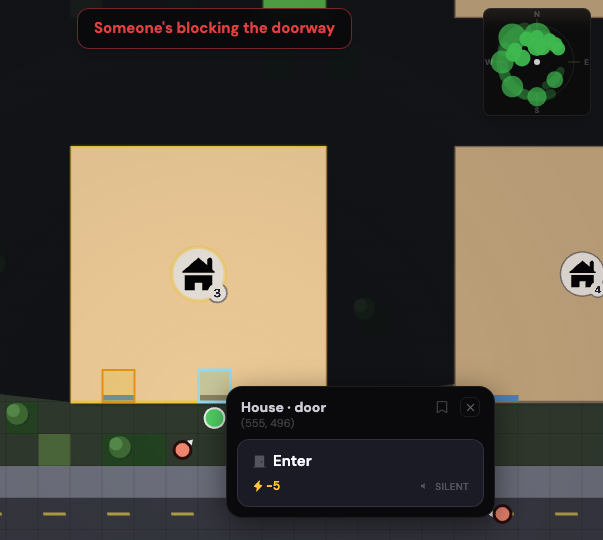
Zombies follow the same rule. One that walks in stands on the threshold first, hunts the floor, takes the stairs if it senses you above, and when there is nothing left to find it heads back out the nearest door.
Upper floors are the same kind of place, one floor drawn at a time, with the stairwell where you swap. The same rules apply up there, with one difference: nothing on the street can climb in through an upstairs window, so the only way up to you is the stairs.
What I don’t know yet is how much of this survives contact with the night. A doorway you can hold is a doorway they can pile up in. The old building was a countdown; the new one is a countdown you can see, and I want to find out whether seeing it makes it better or just longer.