Clothes came with a scrap of protection and the Things wear out entry gave armor a bar that runs down. Both were built on a number I never looked at hard: every worn piece soaked a fixed amount off each hit. A zombie’s bite is small, so a fixed soak on a t-shirt and jeans ate most of it. A new survivor in the clothes they spawned in was close to immune to a bite, and a proper vest on top barely moved the needle.
A share of every hit
Now each worn piece deflects a percentage of every hit, and the percentages add up. A t-shirt is a few percent, boots a bit more, a jacket more again, and a real vest is the biggest single piece there is. The sum has a ceiling: even a perfect kit lets a fifth of every hit through, and no hit is ever reduced to nothing. In practice, a full kit turns a bite into a scratch and it takes something like fifty of them to kill you. Ordinary clothes barely help, which is what ordinary clothes should do.
The ceiling is what keeps people dangerous. A fifth of a bite is a scratch. A fifth of an axe or a shotgun blast is still a real wound, so a survivor in the best kit takes about fifty bites to kill and only a dozen or so good hits from another survivor, and a fight between two people is still decided by what they’re holding.
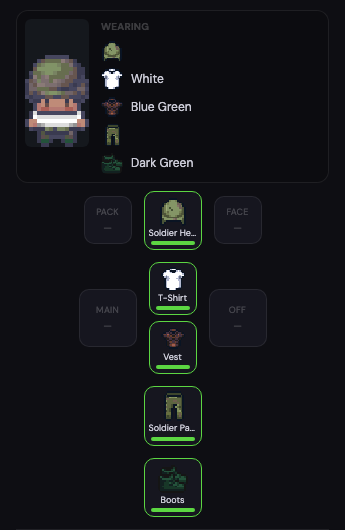
The vest and the jacket now share the outer slot, one or the other, so the answer is no longer “wear both”. The vest deflects more and weighs a lot more, and the weight comes straight out of what you can carry: the same kit takes a good part of the pack before you’ve picked up a single can.
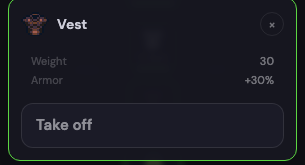
The piece that works, wears
Wear follows the new rule exactly. A piece wears by the damage it actually deflected, not by the number of hits. The vest takes the biggest share of every bite, so the vest wears fastest. Boots deflect a little and last for ages. That means a kit never dies all at once. The vest goes first and the survivor is suddenly taking twice the damage, then the helmet, and each loss is a step down you can feel. Last week I said the t-shirt never wears because it isn’t equipment. It wears now, same rule; it just deflects so little that it takes forever.
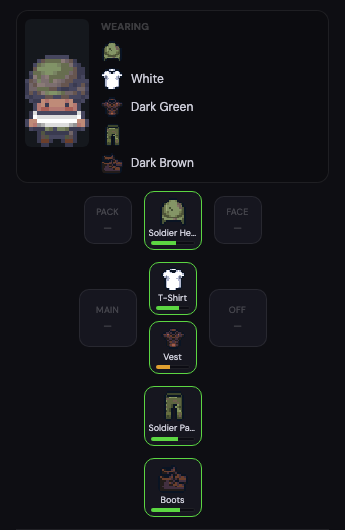
This is the picture I wanted and didn’t have before. A survivor who has been through a fight looks like it on the sheet: one piece nearly gone, the rest fine, and a decision about whether to take the vest off and save what’s left of it for the night. The Things wear out entry already lets you mend a piece with a spare of the same kind, so a second vest off a body is worth more than it looks.
What else a piece could do
Armor and weight are the only two things a worn piece does today, and I built room this week for more. A piece could change how far you see, how much a step costs, how loud you are, how hard you land from a window, or lock you out of sneaking altogether. A motorcycle helmet that narrows your view. Boots that make every step cost less. A vest so stiff you can’t crouch in it. The hooks are all in place and every one of them is at zero, on purpose, until I’m sure which of them make a decision and which just make a spreadsheet.
One thing I ruled out: nothing you wear will ever change how the dead see you. No camouflage, no dark clothes at night. Zombies see what’s in front of them and hear what you do, and the only way to be harder to notice is to move less and make less noise. A jacket shouldn’t be allowed to buy that.