The Zombies entry said a zombie is steered by noise rather than alarmed by it. That part was thin: a noise pulled the zombie toward the last thing it had heard, and that was the whole rule. This week I went back to it, because the rule was producing the wrong street.
A pull that fades
The old rule kept one sound per zombie, the newest one, so a footstep could overwrite a gunshot, and the pull never wore off.
Now a heard sound is a weight. A shout weighs more than a scream, a scream more than a gunshot, a gunshot more than a door being forced, and a footstep barely registers. Reloading and eating weigh nothing. Sounds from the same spot add up, so a survivor who keeps making noise out-pulls a single loud thing across the block. And the whole pull fades: a little while after the noise stops the zombie has forgotten it and goes back to wandering.
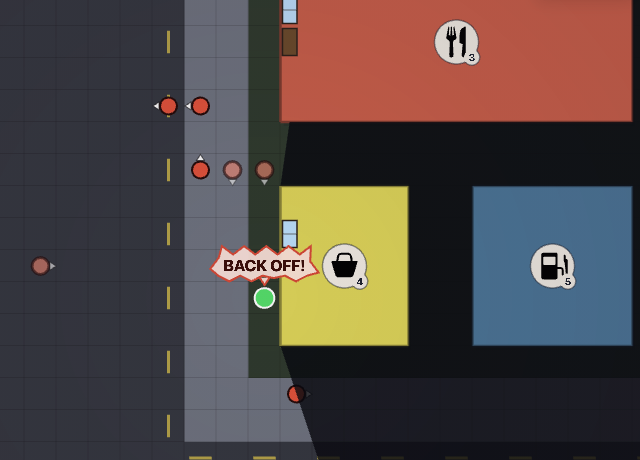
The part you feel most is the startle. A zombie acts on its own slow clock, and before this week it heard your shot and finished waiting out its turn before doing anything about it. Now a loud sound cuts the wait. Shout on a street and the ones within reach turn at once.
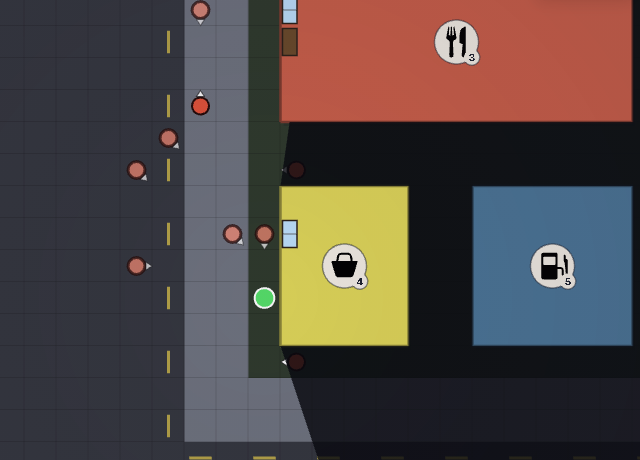
Loud enough to come in
A zombie only ever shoved a door or chewed boards if it had seen you go in. Sound never got it past the doorstep: it would drift to the door and mill about outside, and you could sit behind a single plank and shout all day.
That’s gone. A loud sound, a shout, a scream, a shot, a break-in next door, now commits a zombie to forcing the opening the same way sight does. It doesn’t alert it, sound never does, but it puts it on the boards. Quiet sounds still only bring it to the door. A zombie that has chewed a door for a while with nothing to show for it gives up, unless a fresh noise from inside resets its patience.
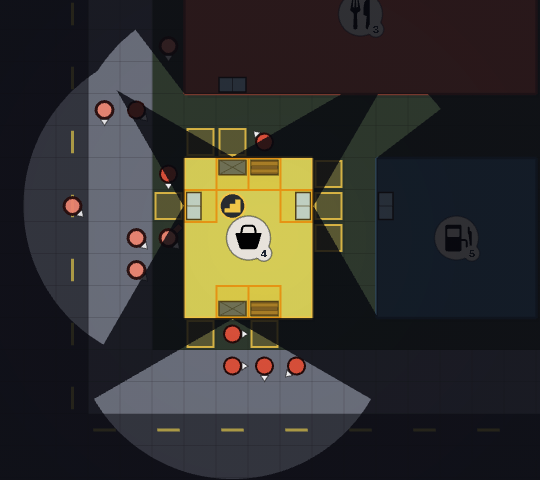
The bigger change is stairs. The Buildings entry called an upper floor the safest spot in the city, because a zombie that got in only found whoever was on the ground floor. Not any more. A zombie inside a building with nobody on its floor now climbs, a floor at a time, toward the nearest survivor anywhere in the building, and once nobody is left it comes back down and shambles out. Upstairs is still quieter and further from the door, and no longer out of reach.
A zombie that reached the spot where it heard you used to wander off the moment it arrived. Now it lingers and sweeps its cone in place, turning, before it gives up, and a survivor who slipped a few steps to the side can be found by that turn.
Guards
The other half of the week was about who the zombies are. Some buildings now have guards. A share of the zombies homed to a fire station spawn as firefighters, in the helmet, jacket and pants. The barracks and the tents spawn soldiers. The prison spawns inmates. The outfit is real gear: it drops when they die. Firefighter gear also turns up in the fire station and the uniform in the prison; the soldier set only comes off a soldier. A firefighter guard now and then carries an axe.

Guards are on a leash. They wander around their building rather than diffusing into the district, and after a chase they walk back home. The base already had a horde sealed inside its fence; its guards now re-skin that horde to soldiers. The prison had only the thin crowd of any other block, which read wrong, so it got a yard horde of its own, most of it in prison uniform, kept near the prison by the leash.
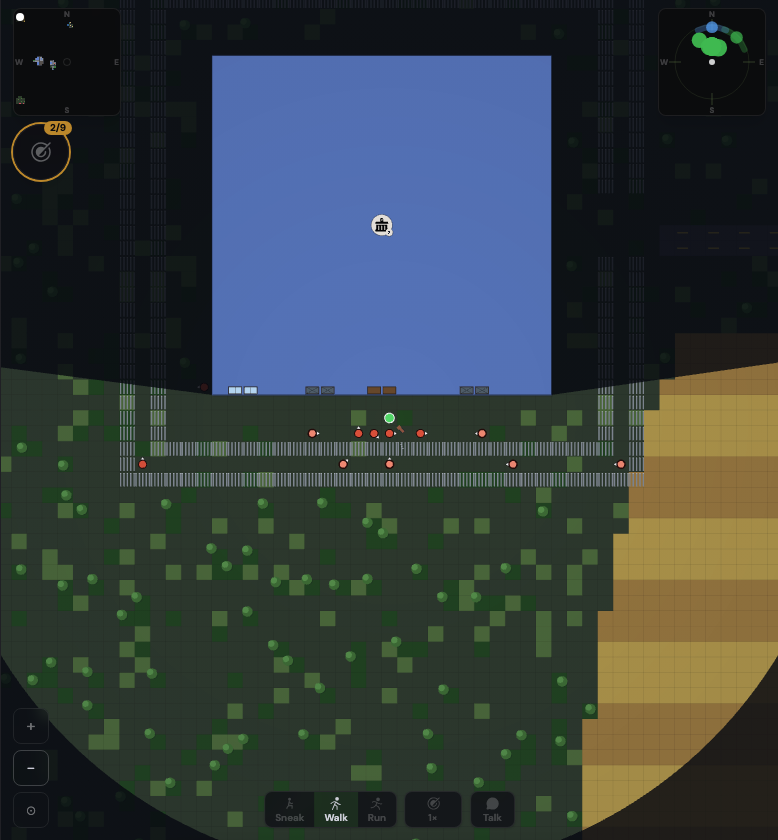
Every one of these changes makes the zombie better at finding you, and the night was already the hard part. Whether a pull that lingers, a door that gives to a shout and stairs that don’t stop them add up to a night that’s frightening or a night that can’t be survived is the thing to watch now.