The first-hour entry was about what a new player meets. This one is about what the game says to them while they meet it, at the moment and the place where the question comes up.
The intro leads with the clock
The intro got a new second slide. The second thing the game tells you now, right after welcome, is the rhythm: every action spends energy, energy comes back on its own a little each minute, and the dead keep the same slow clock. Before this the intro went straight from welcome to noise, which is the exciting part and the wrong place to start, because a player who does not know that energy is a currency spends it all in the first five minutes.
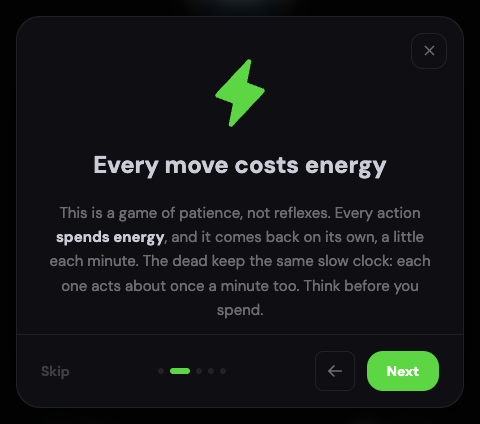
One correction went through everything at the same time. Copy in several places said energy was “earned by resting”. There is no rest action and never was.
A tip sits next to what it points at
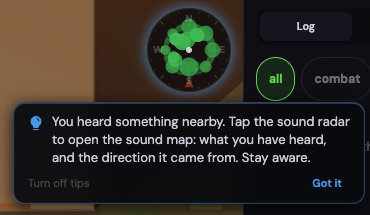
A tip used to be a box at the top of the screen. It might say “tap the sound radar” and the radar would light up in its corner, far from the box talking about it. Now a tip about a control tucks in beside it while the control glows, and a tip about something on the map stays at the top while the thing itself pulses.
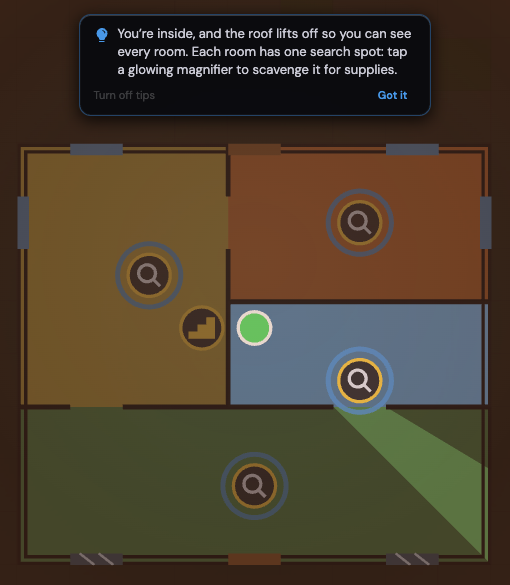
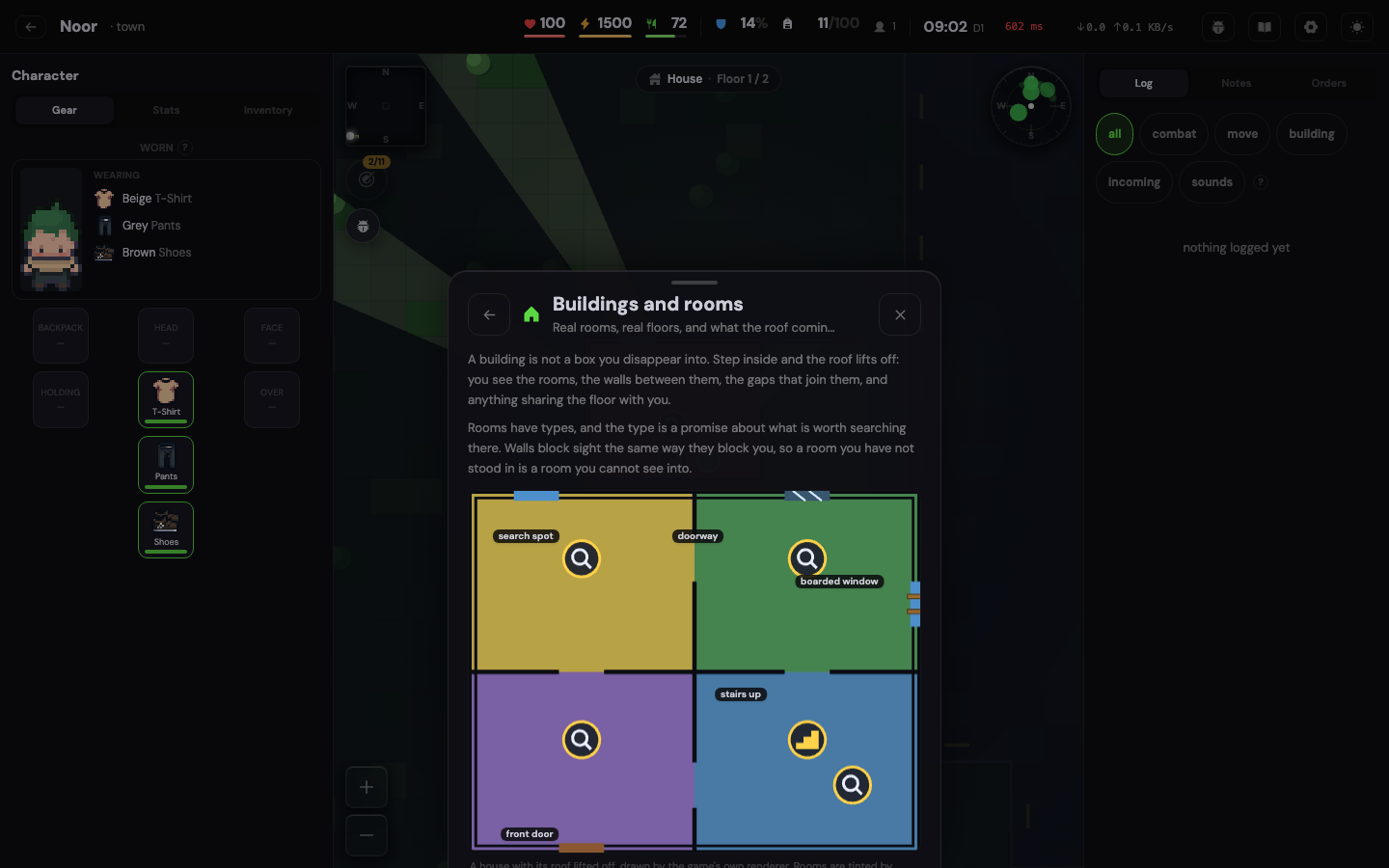
The old “you are inside” tip was one line about the roof, the magnifier and the door out, and it said nothing about stairs or boarding. It is now three beats, each fired when it matters, each lighting the real tiles on the roof-off map. Step into a building for the first time and the search spots pulse. If it has more than one floor, the stairs pulse next. Then every door and window lights up, and the tip says to board them before the dead come. The getting-started checklist grew two goals to match, search a room and barricade an opening, and only a real search and a real board count.
The Survival Guide
The tips are a sentence or two on purpose. Some players want the whole chapter. So the game now carries its own manual, the Survival Guide, one article per system, from energy and hunger through buildings, sound, zombies and death to the controls. Twenty-one topics with a search box on top, in the same bottom sheet as everything else, with the city still live above it.
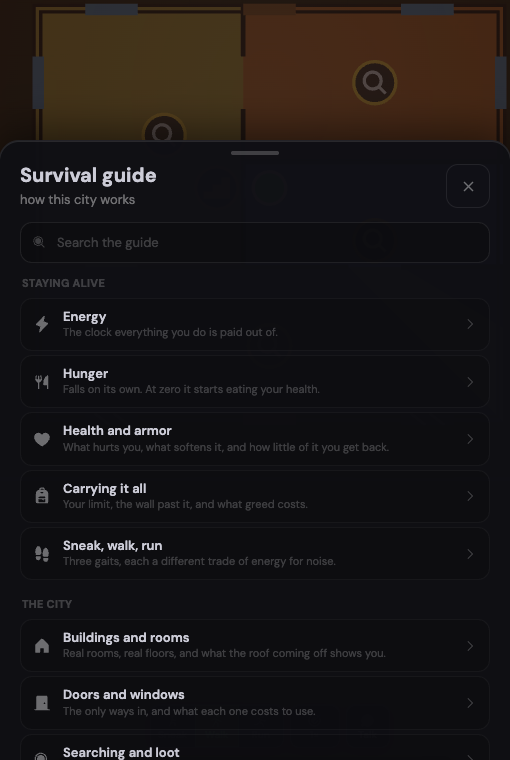
Two rules shaped it. The first: every number in the guide is read from the live rules of the city you are standing in. The guide does not have a copy of the numbers, so if a city runs on a different clock, the guide in that city is right without anyone touching it. A manual that can drift from the game is worse than no manual, because the player trusts it. The second rule: the guide never states what the game hides. Barricade grades stay grades. What a room can hold is described, never listed. How many dead the city carries is not in there.
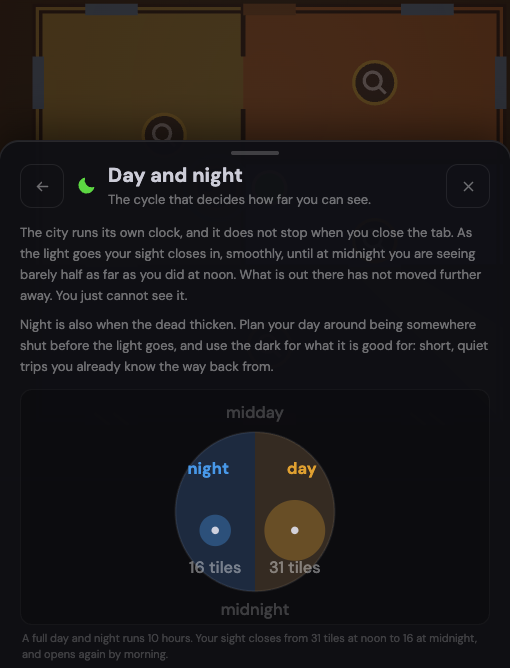
The figures are drawn, not photographed. The building diagram is the game’s own interior drawn from a hand-made house, so it cannot look different from what a player sees when a roof lifts off.
The guide opens from where the question is
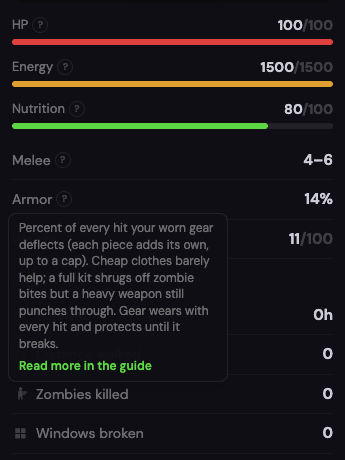
A manual is only worth writing if it is reachable at the moment a player wants it. So it opens from the menu, from the last intro slide, and, the one that matters, from any question mark whose subject has an article. The little “?” next to a stat or an action keeps its short answer, and now offers “Read more in the guide” under it, which lands you on the matching chapter.
A guide is an admission. The best explanation of energy is a street where you ran out of it, and the best explanation of boarding is a night where you did not. The manual exists for the player who wants to read before they bleed, and I would rather have it and find it unused than not have it and find players leaving because a number surprised them.