Every entry so far assumes a city with other people in it, a clock that never stops, and a death that is final. That is the game, and it is a hard place to learn, because every mistake is paid for in a survivor you spent days on. This week I built a second place: a practice town.
A town in your pocket
The practice town is the whole game, running inside the browser. Not a demo, not a simplified copy. The same rules that run a real city run this one: the same generator lays out the streets, the same dead drift and chase and chew, the same energy drains and the same night falls. There is no server running the town. It runs on the phone in your hand.
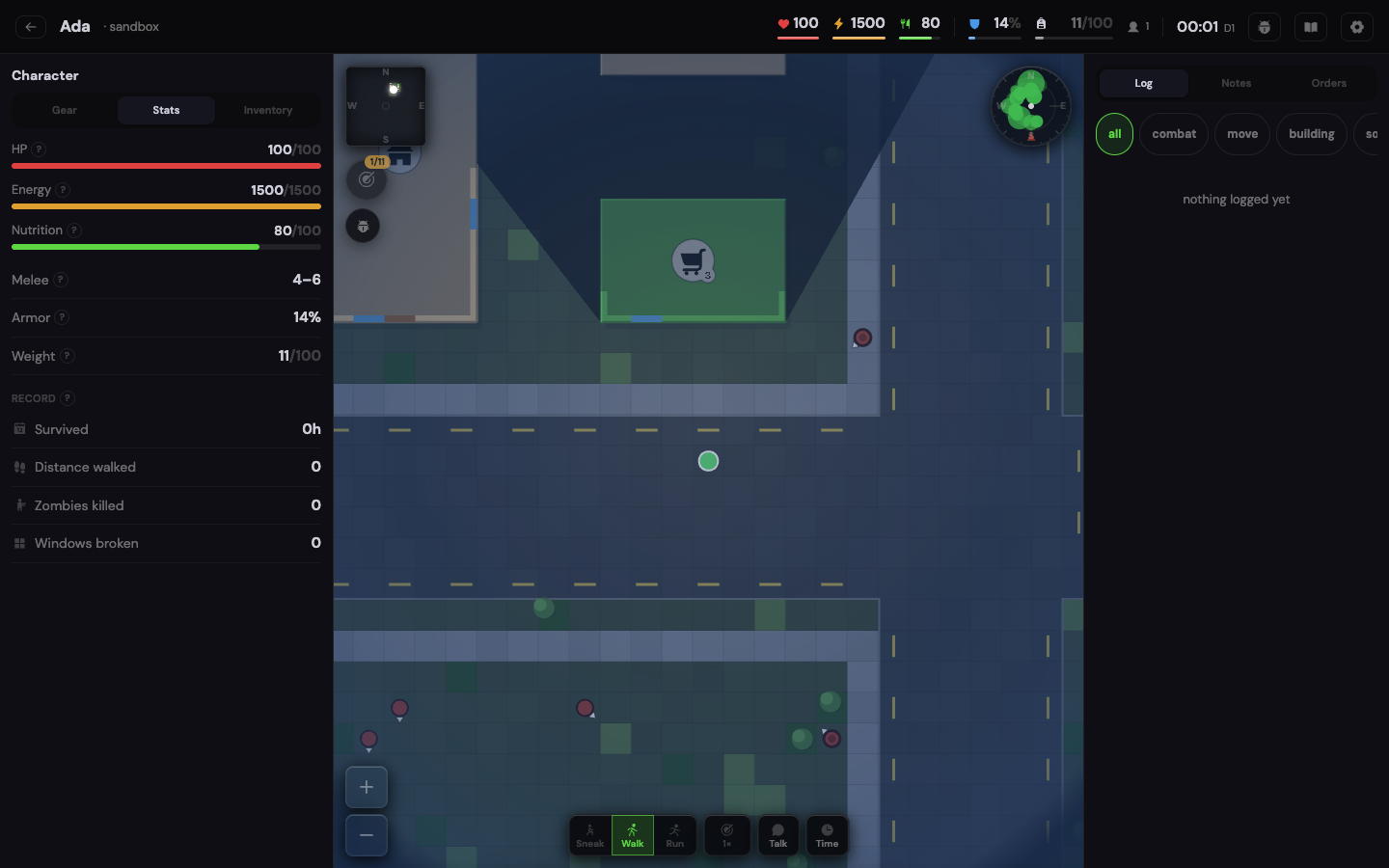
Two things make it a practice town and not just a private city. Nobody else is in it. And it stays on your device: leave and come back and you walk into the town you left, as the survivor you left in it. The town itself is never stored, because it can be rebuilt exactly from its seed. What is kept is everything that has moved on since the town was built: the doors you boarded, the rooms you emptied, the dead, where you are and what you carry.
The clock is yours
For a few hours the town kept going while you were away, the way a real city does. Close the tab, come back an hour later, and the town had lived that hour without you. That was honest, and it was the wrong honesty for this place. A real city keeps going because other people are in it. A practice town has nobody, so the only thing the running clock did was punish you for closing the app.
So now it stops. Close the game and the town stops with it, and you come back to the exact moment you left. Time in the practice town moves only when you choose, from a Time sheet.
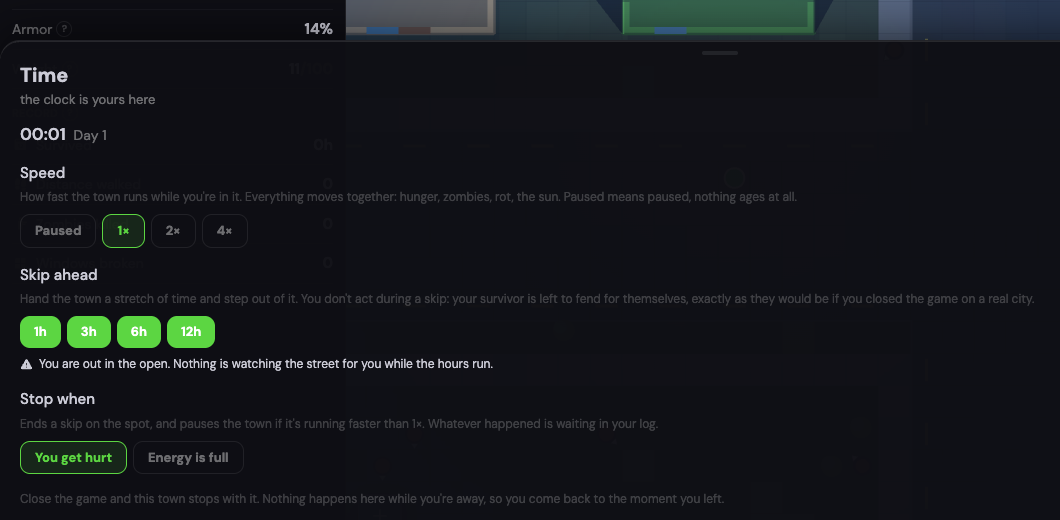
Speed runs the whole town faster or pauses it. Everything moves together: hunger, the dead, rot, the sun. Skip ahead hands the town a stretch of hours and steps you out of it. Your survivor is left to fend for themselves, exactly as if you had closed a real city, and whatever happens in those hours lands in your log marked as while you were away.
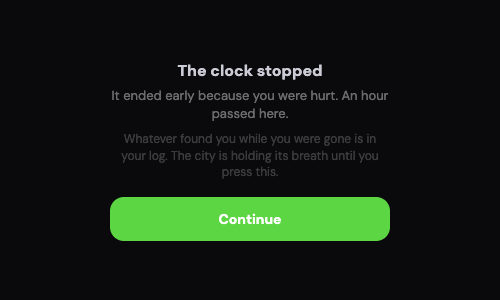
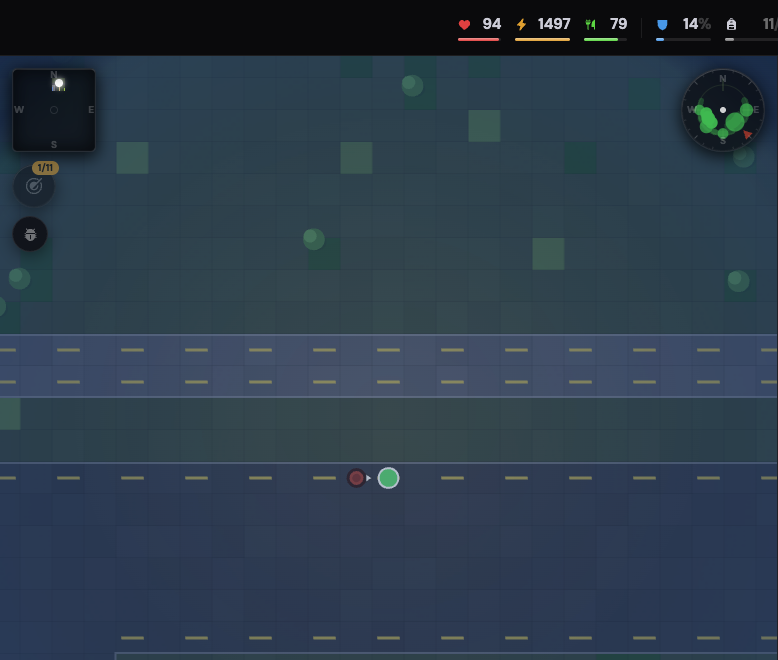
A skip is dangerous on purpose, so it has a leash. Stop when: you get hurt, or your energy is full. The first is on by default. If a zombie reaches you in hour two of a six-hour skip, the clock stops on that tick and hands the town back to you, paused, with a plain sentence about why. The screen holds until you press Continue, and the town is frozen underneath it, because you cannot react to something you cannot see. Pressing Continue is the same act as starting the clock.
Dying here costs nothing
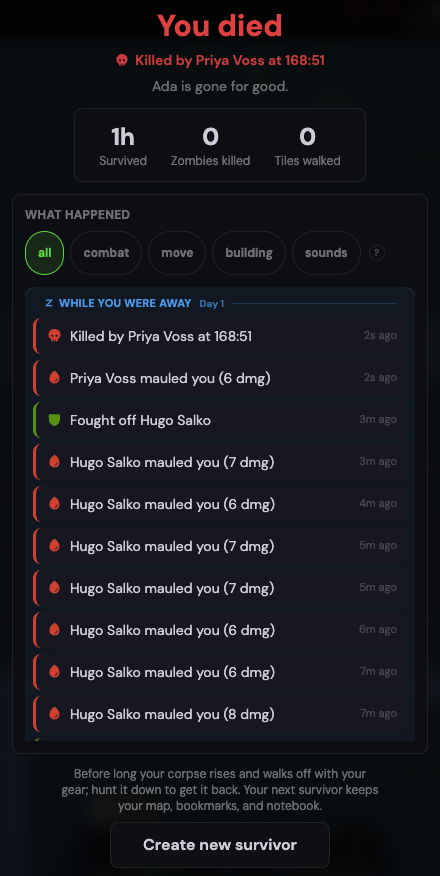
In the practice town you can stand in the open at night to see what the dead do, skip twelve hours with the leash off, and find out. When it goes wrong, and it goes wrong fast, the death screen is the same one the real city shows, and the next survivor walks in a moment later. The town is still there, the doors you boarded are still boarded, and your notebook came with you.
A town with nobody else in it is not the game. Half of what makes a real city dangerous is other people: the shot someone fired two streets over that pulled the dead your way, the door you found already boarded. None of that happens here. I worry that a player who learns in the practice town learns that the city is a puzzle with a fixed answer, and then walks into a real one and gets killed by the part they never practised. The warning on the Time sheet and the leash on by default are there for that reason.