The Fighting entry made every swing a deliberate tap and Auto, after all gave weapons their time and their range. Neither of them cared where the zombie was looking, so sneaking up on one got you the same swing as walking up to it. The Zombies entry said a zombie sees what’s in front of it and nothing else. This week that finally matters when you hit it.
The first hit
A melee hit on a zombie that isn’t hunting you does double damage. The menu says it before you swing: the row reads Sneak Attack instead of Attack, the damage is doubled, and a green line says why. With a bat, a good sneak attack drops an ordinary walker in one.
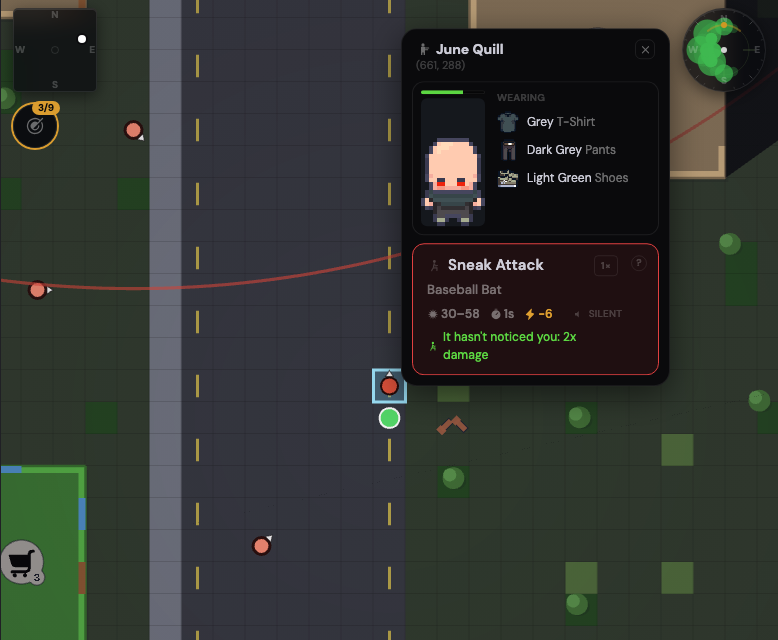
Then it has noticed you. The hit provokes it: it snaps around to face you, locks on, forgets whatever sound it was drifting toward, and comes at once instead of waiting out its slow clock. The bonus is a one-time opener, spent the moment you use it. If the first hit didn’t kill it, the second one is an ordinary fight with a zombie that is now very interested in you.
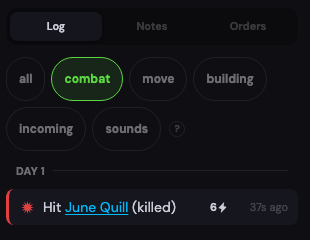
Guns don’t get it. A shot is too loud to sneak, and the noise is already the price. And the zombie is sticky once it’s on you: two survivors can’t take turns opening on the same walker while it spins between them. It commits to one and mauls that one, and switches only for someone strictly closer.
Where a fist can reach
You hit what your hand can reach, and a shut opening is not reach. From inside a building, a fist only reaches out through an open or broken door or window you are standing in. A shut door, a boarded window, an intact pane, a wall: the swing stops at the glass. Sight passes glass and fists don’t. The Real interiors entry already stopped the street from punching in; now the room can’t punch out through a shut opening either. Break the glass first if you want to hit through it, and pay the noise for that.
The doorway is the exception, because a doorway is open. A zombie standing on your own threshold is inside your reach, and inside its reach, which is the fight the Real interiors entry set up when it made the threshold the exposed moment. You can hit it from the room beside the door, and you can still squeeze out past it if you’d rather run, at the cost of fleeing.
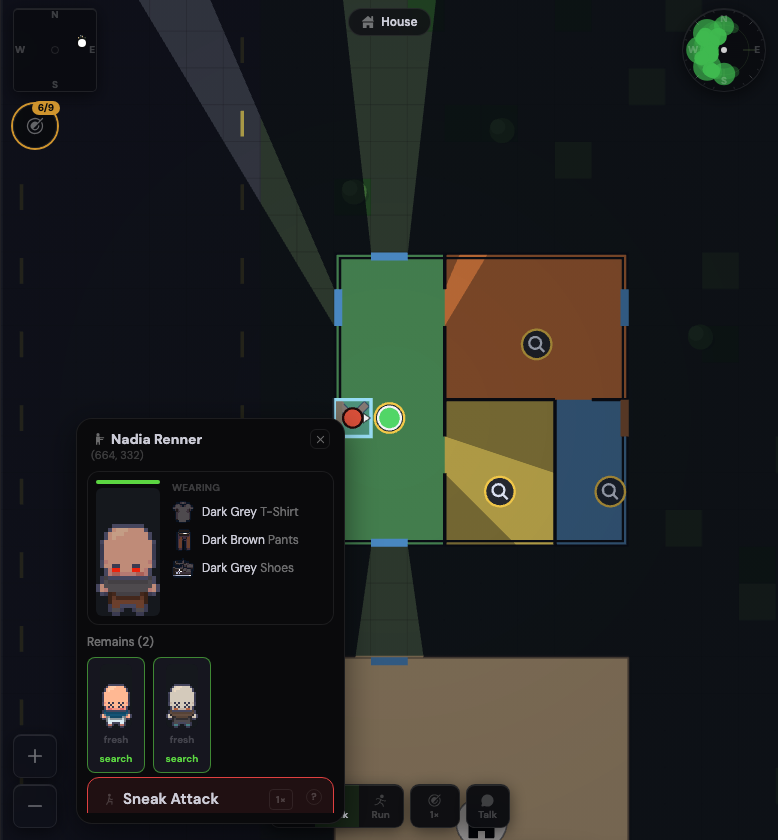
And you can’t tap what you can’t see. A zombie hidden behind a wall or past the edge of your sight used to be selectable if you knew where it was, and the card would tell you what it wore. Now the tap finds nothing.
The walker in your friend’s coat
The Dying entry said your character stands up after death, waits where it fell, and keeps what you wore, and the Other survivors entry said that body is what makes killing a person a bad idea. Until this week it was also easy to spot. A dead survivor’s walker drew bigger and in a different colour, so anyone could pick the one carrying a real loadout out of a crowd from across the street, and go straight for it.
It looks like any other walker now. Same size, same colour, same dot. The only way to know is to get close enough to tap it, and then the card tells you: the name it had, and what it is still carrying.
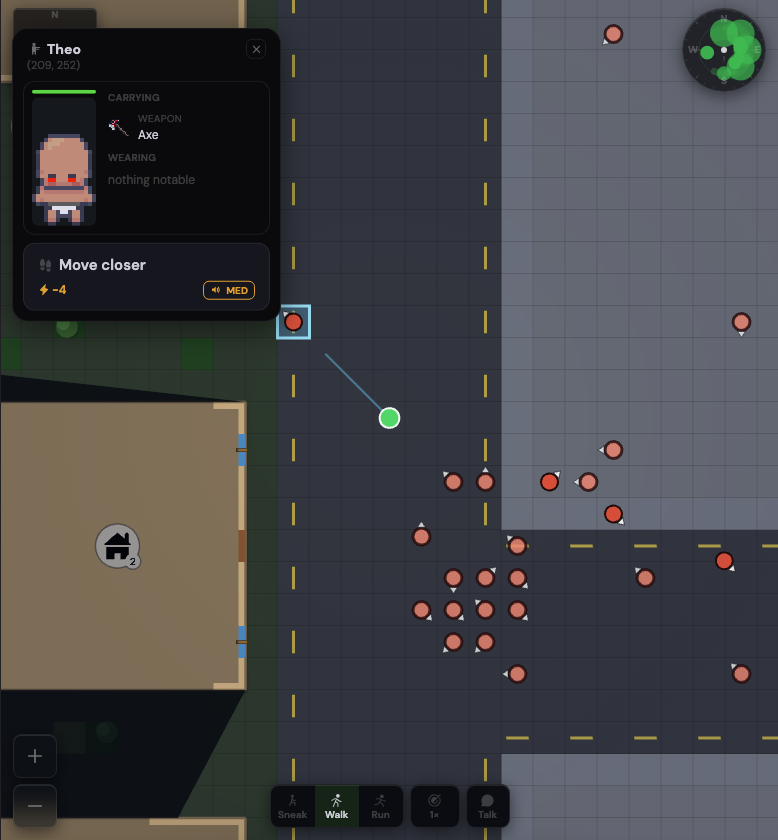
Any of them might be somebody now. The one with the axe is worth a fight and looks exactly like the ones that aren’t, so finding your own body, or someone else’s, means walking up to walkers and looking, which is the most zombie-film thing the game has asked anyone to do so far.
The doubt is the double hit. It makes sneaking worth something, which I wanted, and I can already see a survivor with a bat working down a quiet street one walker at a time. Whether that reads as tense or as a chore depends on how often the second one hears the first.