For two months every survivor was called SURVIVOR and a number. Clothes came in a while ago, a random shirt, pants and shoes on every new survivor, and a tap on anyone, living or dead, to see what they had on. It was better than squares, and it left a doubt: maybe random clothes aren’t enough, maybe people need to choose their look to recognise themselves. This week I stopped wondering and built the screen.
The screen
The first time you enter a city you don’t arrive. You stand at a screen with your survivor on it and you decide who walks in. A name. Skin, eyes, hair and its colour. A shirt, pants and shoes, each in a colour from the same palette the clothes in the city come in. Which hand you favour. A randomize button for people who don’t care, and the character standing there, changing as you change it, for people who do. Then a button, and you’re in.
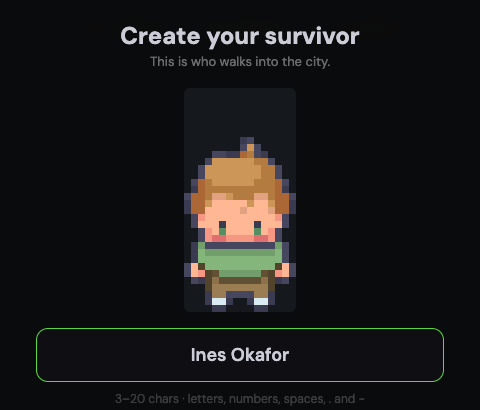
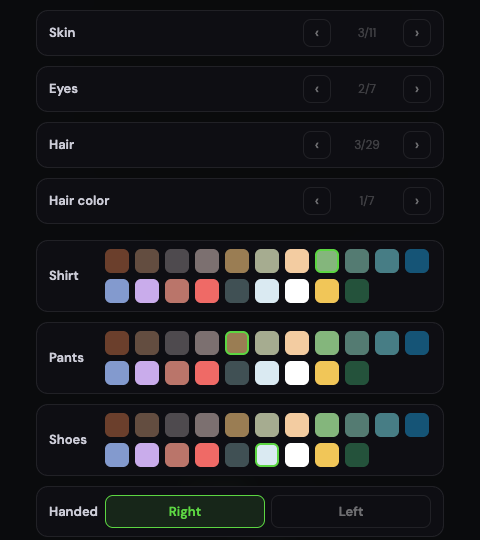
It’s a short screen on purpose. There is nothing here that makes you stronger, because nothing about a survivor makes you stronger except what they carry. The face is how people tell you apart up close, the clothes from across the street, and the name is how they talk about you.
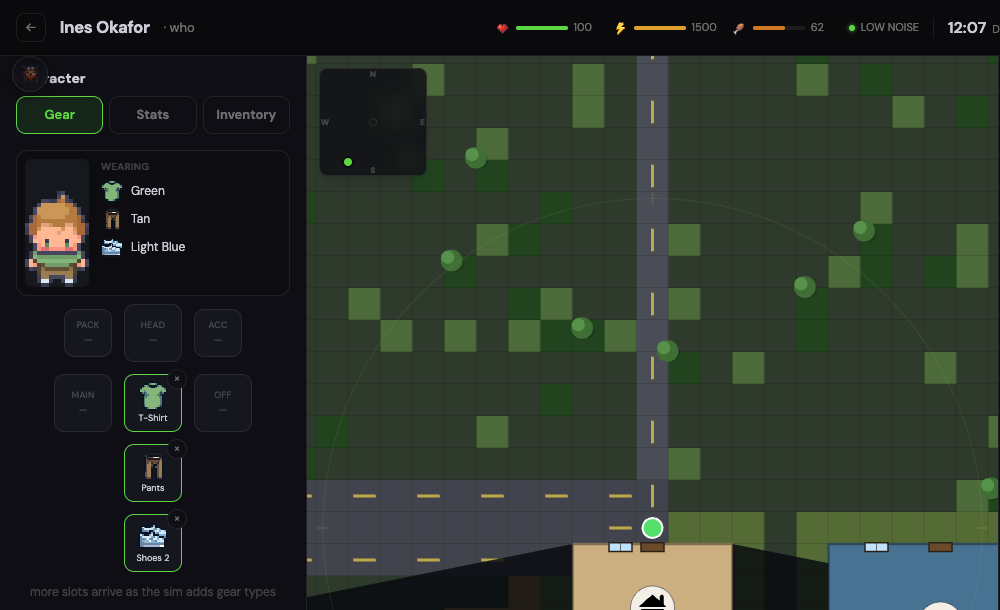
The shirt you pick is not a paint job. It’s an item, in your colour, sitting in the shirt slot of your gear, and it behaves like any other piece of gear. You can take it off. You can lose it. Someone can tap you and read it from across the street. And when you die and stand up again as a zombie, you’re still wearing it, so the friend who finds you knows. There’s a difference between “a zombie in a green shirt” and “Ines’s green shirt”, and that is the Dying entry’s promise, kept by a screen that takes a minute.
The name is for keeps
The name has rules. A few letters at least, a short line at most, letters and numbers and the odd space or dot. It has to be one nobody else in that city has, living, dead or walking. Rude names are refused. And it’s permanent: there are no registry offices left to change it. The screen says so before you type.
I want to say why permanent, because it’s the kind of rule that looks mean. A name you can change is a name nobody learns. If the survivor who took your bat can be someone else tomorrow, there’s no point remembering who took your bat, and remembering is most of what a small city of players is for. A name that stays is a name people can hold you to. The same goes for unique: one name, one person, so “Rosa did it” means something.
Zombies have names too
Tap a zombie and it has a name. Not a label floating over the map; you only get it when you tap one, when you’ve stopped to look. Every one of them has a name the city gives the dead, one per zombie, the same every time you meet it. A few were survivors you’ve met, and you know those by their clothes, not the name.
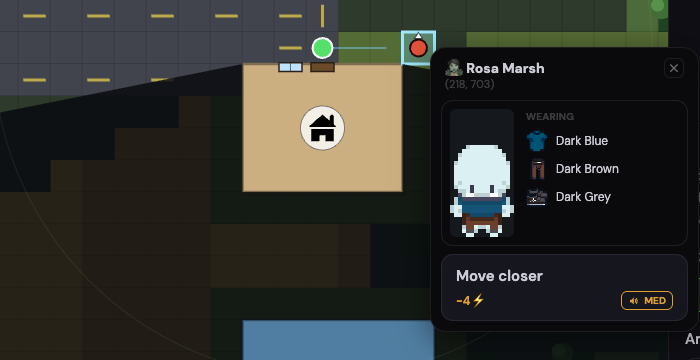
For a few hours the names floated over every zombie on the map. That made the street read as a crowd of people, which is the right feeling, but it also made them easy to tell apart from a distance, and telling them apart from a distance is something you should have to stop and look for.